 English
 Español
 عربى
عربى 中文简体
中文简体

Perfume Spray Tube: How It Works, Types, and Benefits Explained
Content
- 1 What Is a Perfume Spray Tube?
- 2 How Does a Perfume Spray Tube Work?
- 3 Types of Perfume Spray Tubes
- 4 Key Components of a Perfume Spray System
- 5 Comparing Different Perfume Spray Tubes
- 6 Common Problems with Perfume Spray Tubes
- 7 How to Fill a Perfume Atomizer
- 8 Interesting Facts About Perfume Spray Tubes
- 9 Common Misconceptions
- 10 The History of Perfume Spray Tubes
- 11 Conclusion
- 12 Frequently Asked Questions
Every spritz of your favorite fragrance begins with a tiny, precisely engineered component: the perfume spray tube. This slender plastic straw is the unsung hero of the perfume world, quietly drawing liquid from the bottle and delivering it as a fine mist to your skin. But behind this simple action lies a fascinating story of physics, material science, and design precision that most fragrance enthusiasts never consider.
The perfume spray tube is more than just a pipe; it is the critical pathway that connects your fragrance to the atomizer. Its diameter, length, material, and internal geometry all influence how effectively your perfume is dispensed. Understanding this component can transform how you appreciate the engineering behind your daily fragrance ritual.
What Is a Perfume Spray Tube?
A perfume spray tube is a slender, hollow cylinder, typically made from plastic or metal, that extends from the pump mechanism down into the perfume bottle. Its primary function is to act as a conduit, drawing the liquid fragrance from the bottle's reservoir up to the atomizer nozzle where it is transformed into a fine mist. Without this tube, the perfume would remain trapped in the bottle, and your favorite scent would never reach your skin.
This tube may appear simple, but its design is the result of decades of engineering refinement. The tube must be precisely sized to match the viscosity of the perfume, the pressure of the pump, and the dimensions of the bottle. It must also be chemically compatible with the fragrance oils and alcohol to prevent degradation or contamination of the scent.
How Does a Perfume Spray Tube Work?
The operation of a perfume spray tube is based on a fundamental principle of fluid dynamics: pressure differential. When you press down on the pump head, a piston inside the pump mechanism moves downward, compressing a small spring. This action creates a vacuum inside the pump chamber. The vacuum draws the liquid perfume up through the perfume spray tube from the bottom of the bottle, much like liquid being sucked through a straw.
Once the perfume reaches the pump chamber, the pressure is released as you release the pump head. The spring pushes the piston back up, forcing the liquid through a tiny nozzle. The nozzle is designed with a swirl chamber or similar mechanism that breaks the liquid into tiny droplets, creating the fine mist that we associate with a quality perfume spray.
The tube's diameter plays a crucial role in this process. A tube that is too narrow may restrict flow, leading to a weak spray or inconsistent mist. A tube that is too wide may not create enough suction to lift the liquid, especially if the perfume is thick or the bottle is nearly empty. Manufacturers carefully calculate the optimal tube diameter for each specific fragrance formula and bottle design.
Types of Perfume Spray Tubes
While all perfume spray tubes serve the same fundamental purpose, they come in various configurations to suit different bottle designs and pump mechanisms. The three primary types are standard straight tubes, angled tubes, and dip tube variations.
Types of Perfume Spray Tubes
| Type | Description | Best Application |
|---|---|---|
| Standard Straight Tube | A vertical tube extending from the pump directly to the bottom of the bottle | Standard upright bottles, most common type |
| Angled or Bent Tube | A tube with a bend near the bottom to reach liquid in awkwardly shaped bottles | Novelty or uniquely shaped bottles |
| Flexible Dip Tube | A tube that can flex to follow the liquid level as the bottle empties | Specialty pumps, travel atomizers |
| Weighted Dip Tube | A tube with a small weight at the end to keep the intake at the lowest point | Bottles that are frequently tilted or carried on the go |
Key Components of a Perfume Spray System
Understanding the perfume spray tube requires viewing it as part of a larger system. A complete perfume sprayer consists of several interdependent components, each contributing to the final spraying experience.
- Pump Mechanism: The heart of the sprayer, containing the piston, spring, and seal. This creates the suction and pressure needed to draw and expel the perfume.
- Spray Tube (Dip Tube): The focus of this article, this tube carries the liquid from the bottle to the pump.
- Nozzle / Atomizer: The opening at the top of the pump where the liquid is expelled. It is designed to break the liquid into a fine mist.
- Actuator: The button or lever that the user presses to activate the pump.
- Closure / Crimp: The metal or plastic collar that secures the pump to the bottle neck.
- Gasket / Seal: A ring that prevents leakage between the pump and the bottle.
Each component must work in harmony for the sprayer to function properly. If any component is mismatched — for example, if the spray tube is too long or too short — the entire system can fail to deliver a consistent spray.
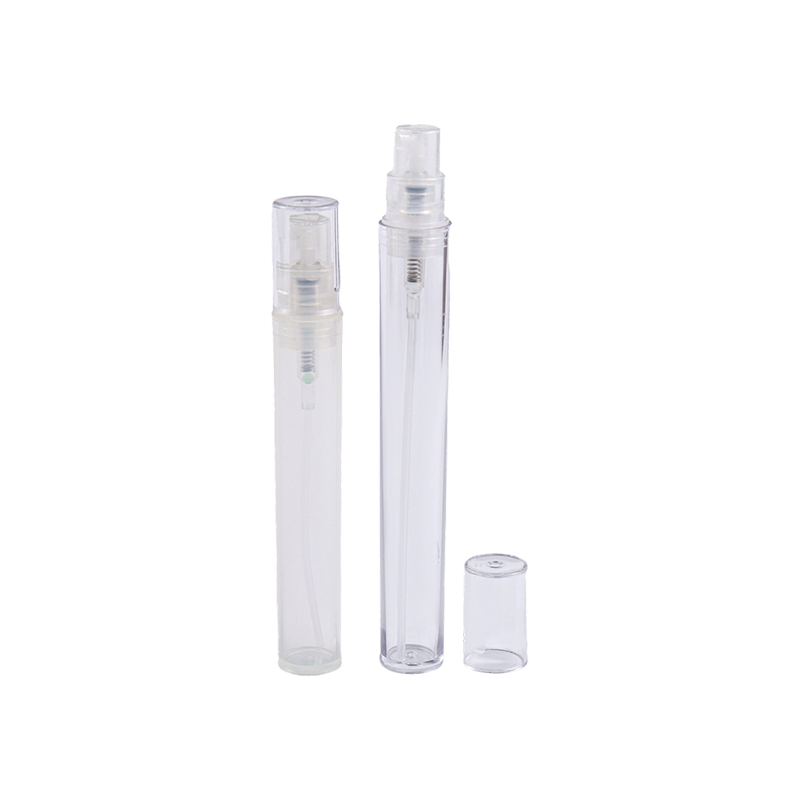
Perfume Spray System Components
| Component | Function | Material |
|---|---|---|
| Spray Tube | Transports liquid from bottle to pump | Polyethylene, Polypropylene, Stainless Steel |
| Pump Mechanism | Creates suction and pressure | Plastic, Metal Alloys |
| Nozzle / Atomizer | Breaks liquid into fine mist | Plastic, Ceramic, Metal |
| Actuator | User interface for activation | Plastic, Metal |
| Closure / Crimp | Secures pump to bottle neck | Aluminum, Plastic |
| Gasket / Seal | Prevents leakage and evaporation | Rubber, Plastic |
Comparing Different Perfume Spray Tubes
Not all perfume spray tubes are created equal. The choice of material, length, and diameter can significantly impact the performance of a fragrance sprayer. The table below compares common tube materials and their characteristics.
Perfume Spray Tube Material Comparison
| Material | Advantages | Disadvantages | Common Use |
|---|---|---|---|
| Polyethylene (PE) | Flexible, resistant to many chemicals, cost-effective | Lower heat resistance, can deform with certain oils | Standard consumer perfumes |
| Polypropylene (PP) | Good chemical resistance, higher heat tolerance, stiff | Less flexible, more brittle | Premium fragrances, travel atomizers |
| Stainless Steel | Extremely durable, chemically inert, luxurious feel | Expensive, heavier, more complex manufacturing | Luxury, high-end perfume bottles |
| Glass | Inert, does not interact with fragrance, visually appealing | Fragile, expensive, difficult to manufacture | High-end, limited edition perfumes |
Common Problems with Perfume Spray Tubes
Even the best-engineered perfume spray tubes can encounter issues. Understanding common problems can help you diagnose and fix issues with your own fragrances.
- Clogging: Perfume ingredients, particularly resins and oils, can build up inside the tube and nozzle over time, restricting flow. This is more common in oil-based perfumes.
- Air Leakage: If the seal between the pump and the bottle or the tube and the pump is compromised, air can enter the system, causing weak or inconsistent sprays.
- Tube Separation: In rare cases, the tube may detach from the pump mechanism, making it impossible to draw liquid.
- Insufficient Length: If the tube is too short, it won't reach the bottom of the bottle, leaving a significant amount of perfume unusable.
- Degradation: Some fragrance ingredients can degrade certain plastics over time, leading to cracks, discoloration, or chemical contamination of the scent.
How to Fill a Perfume Atomizer
Filling a perfume atomizer correctly ensures that your fragrance remains pure and the spray mechanism functions properly. Here is a step-by-step guide:
- Remove the pump assembly: Gently grip the pump mechanism and pull it upward. It should come free from the bottle neck.
- Check the tube length: Ensure the tube extends to the bottom of the atomizer bottle. If not, trim it with a sharp scissors.
- Insert the tube: Carefully guide the perfume spray tube into the atomizer bottle. Align it so it sits straight and reaches the bottom.
- Secure the pump: Press the pump assembly firmly into the bottle neck until it clicks or seals tightly.
- Prime the pump: Press the actuator several times until the spray pattern becomes consistent and fine.
Proper filling prevents air bubbles and ensures that your perfume dispenses evenly. Avoiding common mistakes like over-tightening or using a tube that is too long can extend the life of both your perfume and the atomizer.
Interesting Facts About Perfume Spray Tubes
Despite their small size, perfume spray tubes have a rich history and some surprising facts associated with them.
- The modern perfume spray tube can trace its origins back to the early 20th century when atomizers became popular. Before then, perfume was applied using stoppers or dabbers.
- The first successful aerosol perfume spray was developed in the 1940s, but it wasn't until the 1950s that pump sprays became widely available.
- A typical perfume spray tube has an internal diameter of about 1-2 millimeters, which is thinner than a standard drinking straw.
- Some luxury perfume houses use glass or metal tubes instead of plastic to prevent any potential interaction between the fragrance and the tube material.
- The concept of the "dip tube" was patented in the 19th century for dispensing liquids, but its application to perfumes didn't become standard until the 1960s.
Common Misconceptions
Several myths surround perfume spray tubes and their function. Clearing these up can help users better understand and appreciate their fragrance packaging.
- "All tubes are the same" — As discussed, tube material, diameter, and length vary significantly and impact performance.
- "A longer tube always means better performance" — Not necessarily. A tube that is too long can create excess drag on the liquid, reducing spray efficiency.
- "The tube is just a straw" — While functionally similar, the precise engineering and material science behind perfume tubes are far more complex.
The History of Perfume Spray Tubes
The journey of the perfume spray tube from simple glass pipettes to precisely engineered plastic and metal components is a testament to human ingenuity. In ancient times, perfumes were stored in alabaster and ceramic vessels and applied using a finger or a small stick.
The invention of the glass bottle in the 16th century was a breakthrough, but it wasn't until the 19th century that the first atomizers appeared. These early atomizers used a rubber bulb to create a stream of air that would atomize the perfume. The modern pump spray, which uses a piston and spring mechanism, was developed in the early 20th century and became widespread in the 1950s.
The shift to plastic tubes in the 1960s marked a significant milestone, making production cheaper and more versatile. Today, the design and manufacturing of perfume spray tubes involve advanced materials science, computer modeling of fluid dynamics, and rigorous testing to ensure compatibility with thousands of fragrance formulations.
Conclusion
The perfume spray tube may be one of the smallest components of your fragrance bottle, but its role is anything but minor. It is a triumph of engineering that transforms a liquid into a mist, allowing you to enjoy your favorite scents with a simple press of a button. By understanding how it works, what materials are used, and what can go wrong, you gain a deeper appreciation for the thought and care that goes into every perfume bottle. The next time you spritz on your signature scent, take a moment to thank the humble tube that made it possible.
Frequently Asked Questions
A perfume spray tube is a slender tube that extends from the pump mechanism into the perfume bottle, drawing the liquid up to the spray nozzle. It is a critical component of the atomizer system.
To fill a perfume atomizer, remove the pump assembly, check the tube length, insert the tube into the atomizer bottle, secure the pump, and prime by pressing the actuator several times until the spray is consistent.
The key components include the spray tube (dip tube), pump mechanism (piston, spring, seal), nozzle/atomizer, actuator, closure/crimp, and gasket/seal. Each plays a vital role in delivering the perfect mist.
Different sprayers offer varying spray patterns, mist fineness, and coverage. A quality sprayer ensures even distribution, preserves the fragrance's integrity, and provides a pleasant user experience, enhancing your daily routine.
Perfume atomizers offer advantages like precise application, reduced waste, portability, and preservation of the scent by minimizing air exposure. They also provide a more elegant and enjoyable application experience.
Matching a pump to your bottle requires considering the neck size and thread type, the bottle's height, and the desired spray characteristics. The tube must reach the bottom, and the pump must fit securely without leaks.
Common mistakes include selecting the wrong tube length, choosing incompatible materials, ignoring the bottle neck size, and overlooking the required spray pattern. Each mistake can result in poor performance or waste.





All rights reserved © Shaoxing Shangyu Haibo Spray Plastic Co.,Ltd.Privacy OEM/ODM Spray Plastic Bottle & Pump Manufacturers
浙ICP备2021023122号