 English
 Español
 عربى
عربى 中文简体
中文简体

Technical Analysis of Solvent Permeability and Efficacy in a PP Disposable Stain Remover Pen
Content
Polypropylene Barrier Properties and Chemical Inertness
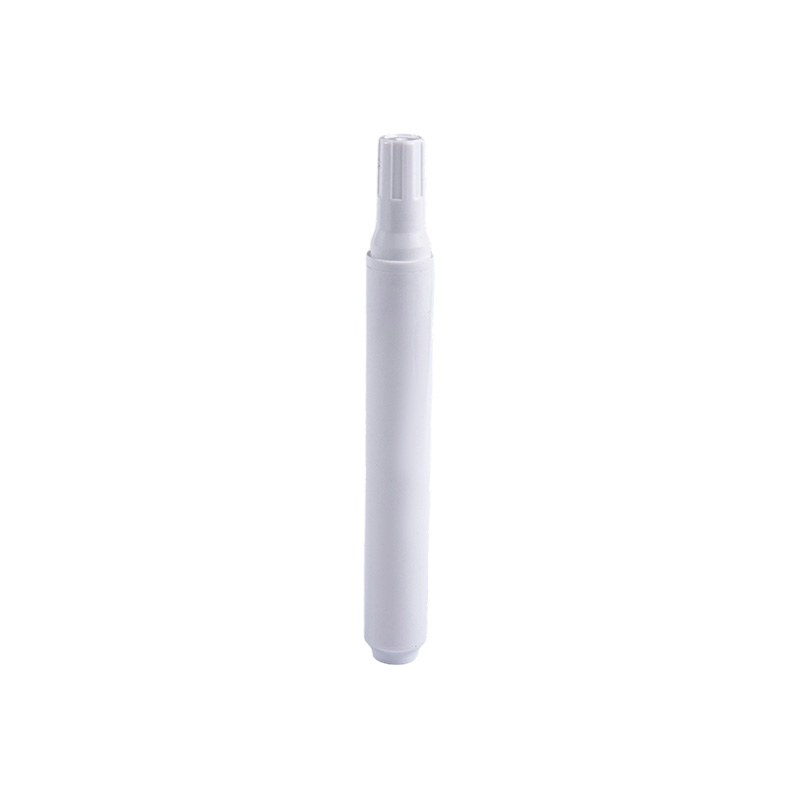
* Molecular Weight and Density Distribution: The structural foundation of a PP disposable stain remover pen relies on the high-density polypropylene (PP) matrix. This semi-crystalline polymer is selected for its high chemical inertness against surfactants and bleaching agents. However, engineers must account for the solvent permeability of PP stain remover pens, as microscopic voids can lead to the migration of volatile cleaning components. By evaluating the moisture vapor transmission rate (MVTR) of PP pens, manufacturers can predict the stability of the aqueous solvent over time. * Resistance to Leachables and Extractables: Utilizing medical-grade polypropylene ensures that the container does not introduce contaminants into the formula. The impact of PP material on cleaning agent efficacy is measured through accelerated aging testing for stain remover pens at 40 degrees C. This process confirms that the PP disposable stain remover pen does not release monomers that could neutralize active peroxygen species, effectively preventing leachable contamination in portable cleaning tools. * Stress Cracking and Surface Ra Finish: To maintain structural integrity, the ESCR (Environmental Stress Crack Resistance) of PP pen barrels must exceed 300 hours under standard testing. A controlled Ra surface finish of the internal pen reservoir reduces the surface energy, ensuring that high-viscosity cleaning fluids do not adhere to the walls, thus maximizing the reservoir capacity of disposable pens during the final stages of use.
Fluid Dynamics and Capillary Action in Nib Engineering
* Nib Porosity and Flow Rate Calibration: The delivery system of a PP disposable stain remover pen is defined by its porous nib, usually constructed from sintered polyethylene or polyester fiber. The nib capillary action in stain remover pens is calibrated to achieve a precise flow rate of 0.02ml to 0.05ml per second. This mechanical precision in fluid delivery ensures that the user can saturate a stain without causing excessive fabric wetting. * Abrasion Resistance and Fabric Integrity: During the friction-based removal process, the tip abrasion resistance of PP stain remover pens is critical. Engineers measure the Shore hardness of the nib to ensure it is firm enough to penetrate fiber weaves but soft enough to prevent fabric pilling during stain removal. A PP disposable stain remover pen with a high-durability nib maintains its geometry even after repeated mechanical agitation on textile fibers. * Pressure-Activated Valve Systems: To minimize solvent evaporation in disposable pens, some designs incorporate a spring-loaded valve. Evaluating the spring fatigue of stain remover pen valves ensures that the hermetic seal remains intact between uses, directly extending the shelf-life of PP stain remover pens to a minimum of 24 months under standard storage conditions.
Sealing Integrity and Ultrasonic Welding Standards
* Hermetic Sealing and Ultrasonic Strength: The assembly of a PP disposable stain remover pen involves ultrasonic sealing for PP containers. The bond strength at the base must be sufficient to withstand an internal pressure of 0.1 MPa. This sealing integrity for portable cleaning pens is validated through vacuum leakage tests for stain remover pens, ensuring that the unit remains leak-proof during air transport where external pressure drops significantly. * Cap Closure and Volatility Management: The interface between the cap and the barrel utilizes a "click-lock" mechanism to provide tactile confirmation of a seal. Engineers monitor the weight loss rate of PP stain remover pens over 90 days to ensure that the solvent permeability does not exceed 0.5% of the total mass. This technical indicator for PP disposable pens is vital for maintaining the long-term chemical efficacy of the active cleaning agents.
| Technical Metric | Industrial Standard | Performance Requirement |
| Polymer Density | ASTM D792 | 0.90 - 0.91 g/cm3 |
| Tensile Strength | ISO 527 | >= 30 MPa |
| Vacuum Leakage | ASTM D4991 | No Leakage at -0.05 MPa |
| Abrasion Resistance | Internal Friction Test | No Nib Deformation < 500 cycles |
Supply Chain Optimization and Material Compliance
* Batch Consistency in Mass Production: For bulk retail sourcing, evaluating the dimensional stability of PP pens is mandatory. A variance of less than 0.1mm in the mold tolerances for stain remover pens ensures that the automated filling and capping lines operate at peak efficiency, reducing production downtime for disposable cleaning tools. * Safety and Regulatory Compliance: Every PP disposable stain remover pen must comply with REACH and SDS standards for cleaning chemicals. This ensures that the chemical inertness of the PP housing protects the consumer while adhering to global safety protocols for portable stain removal products.
Technical FAQ
1. How does PP material prevent the cleaning liquid from drying out? Polypropylene has a low solvent permeability. In a PP disposable stain remover pen, this barrier properties, combined with an ultrasonic seal at the base, keeps the active cleaning agents contained and prevents evaporation through the pen walls. 2. Can the friction from the pen tip damage delicate silk or wool? Engineers calibrate the nib Shore hardness and abrasion resistance specifically to prevent fabric pilling. However, the mechanical agitation should always be tested on a small area to ensure compatibility with specific textile fibers. 3. What is the expected shelf-life of an unopened stain remover pen? By optimizing the sealing integrity for portable cleaning pens, a high-quality PP disposable stain remover pen typically has a shelf-life of 2 to 3 years. This is verified through accelerated aging testing. 4. Is the polypropylene used in these pens recyclable? Yes, PP is a Category 5 recyclable plastic. Using a PP disposable stain remover pen supports sustainability initiatives, provided the cleaning agent residues are handled according to local REACH compliance guidelines. 5. Why is a vacuum leakage test necessary for these pens? Since these are portable cleaning tools, they are often carried in hand luggage. The vacuum leakage tests for stain remover pens ensure they can handle pressure changes during flights without leaking.
Technical References
* ISO 9001: Quality management systems for plastic component manufacturing. * ASTM D4991: Standard Test Method for Leakage Testing of Empty Rigid Containers by Vacuum Method. * REACH Regulation (EC) No 1907/2006: Concerning the Registration, Evaluation, Authorisation and Restriction of Chemicals.





All rights reserved © Shaoxing Shangyu Haibo Spray Plastic Co.,Ltd.Privacy OEM/ODM Spray Plastic Bottle & Pump Manufacturers
浙ICP备2021023122号