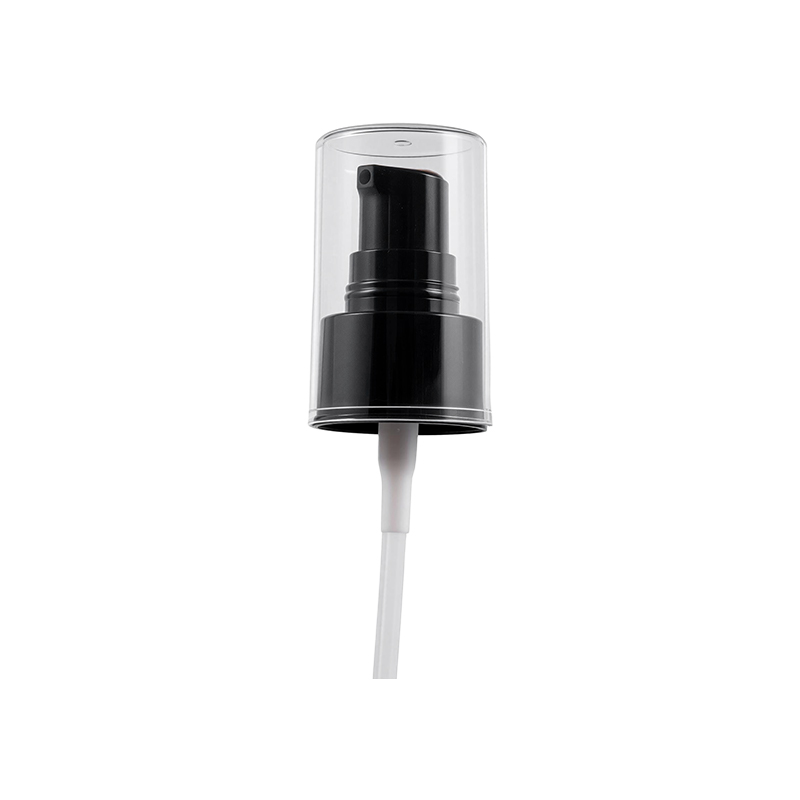
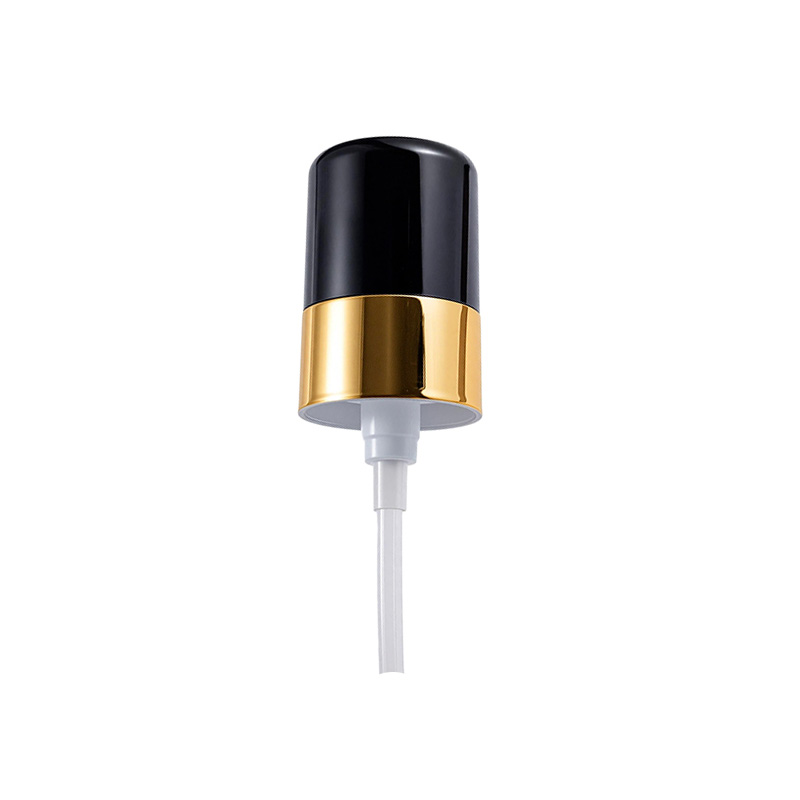
Industry Knowledge: The Cosmetic Spray Pump
The Cosmetic Spray Pump is an engineering marvel that transforms liquid formulations into a fine, uniform mist, fundamentally shaping the user experience and efficacy of countless personal care products. As a specialized manufacturer of mini sprayers, perfume pens, and atomizers since 1995, Shaoxing Shangyu Haibo Spray Plastic Co., Ltd. possesses a deep, technical understanding of the fluid dynamics, material science, and precision manufacturing that define a high-performance spray pump. This article explores the core industry knowledge surrounding this essential component.
1. The Science Behind Atomization: Analyzing Core Parameters and Nozzle Design Principles of Cosmetic Spray Pumps
The quality of a spray is not subjective; it is a quantifiable outcome of precise engineering. The magic behind a perfect mist lies in the intricate design of the pump and nozzle, which is our core expertise in spray heads and mini sprayers.
Key Parameters and Technical Points:
| Parameter |
Typical Specification |
Impact on User Experience |
| Droplet Size (Microns) |
30-60 μm for fine mist; 60-100 μm for standard spray |
Smaller droplets create a "dryer," more luxurious feel and better coverage; larger droplets deliver product faster. |
| Spray Pattern |
Hollow Cone, Solid Cone, Flat Fan |
Determines the area and shape of coverage (e.g., wide area for setting spray, targeted stream for sunscreen). |
| Output Rate (ml/s) |
0.5 - 1.5 ml/s |
Affects how much product is dispensed per second, influencing efficiency and consumption. |
| Nozzle Micro-Channel Design |
Vortex chamber, spiral channels, orifice arrays |
The internal geometry is the most critical factor in determining droplet size and spray pattern. |
2. From Formula to Pump: A Compatibility Study of Different Cosmetic Viscosities with Spray Pumps
A spray pump is only as good as its compatibility with the formula it dispenses. The physical properties of the cosmetic liquid—especially its viscosity—dictate the pump's design requirements for optimal performance.
Key Formulation and Compatibility Factors:
- Liquid Viscosity (measured in mPa·s or cP):
- Low Viscosity (1-10 cP): Toners, floral waters. Require standard pumps with fine nozzles.
- Medium Viscosity (10-100 cP): Serums, liquid foundations. Require pumps with larger channels and stronger springs.
- High Viscosity (>100 cP): Lotions, sunscreens. Require specialized high-viscosity pumps or trigger sprayers.
- Material Compatibility:
- PP/PE: Good chemical resistance for most water-based and oil-based formulas.
- PCTG: High clarity and excellent chemical resistance, ideal for premium skincare.
- Aluminum: Often used for perfume atomizers, offering a premium feel and excellent barrier properties.
- Testing Protocol: Involves dynamic life-cycle testing (pressing the pump thousands of times) and static immersion testing (soaking components in the formula) to check for performance degradation or material incompatibility.
3. User Experience First: The Ergonomic Design of Spray Pumps and Brand Value Enhancement
In today's market, a spray pump is a direct interface between the brand and the consumer. Its design, feel, and functionality are critical to user satisfaction and brand perception.
Key Design and UX Considerations:
- Ergonomics and Actuation:
- Press Stroke & Force: A shorter, lighter press (e.g., 8-12N force) is perceived as more premium and user-friendly.
- Locking Mechanisms: Twist-to-lock (travel lock) and clip-lock features are essential for preventing leaks during transport and adding a premium touch.
- Aesthetic Customization:
- Color Matching: Using Pantone color matching to align the pump perfectly with brand identity.
- Surface Finishes: Options include glossy, matte, brushed metal, and soft-touch finishes to enhance tactile and visual appeal.
- Functional Innovation:
- 360-Degree Spraying: Allows the pump to function in any orientation, including upside down, a key feature for body sprays and hair products.
4. Supply Chain Deep Dive: The Quality Control System for Cosmetic Spray Pumps from Precision Molding to Automated Assembly
As a comprehensive manufacturer established in 1995, our strength lies in controlling the entire production lifecycle. Quality is embedded in every step, from the initial mold design to the final product inspection.
Production and Quality Control Stages:
- Precision Injection Molding:
- Mold Tolerance: Nozzle molds are held to extremely tight tolerances (±0.005mm) to ensure consistent atomization across millions of units.
- Clean Room Environment: Assembly is conducted in Class 100,000 clean rooms to prevent microscopic dust from clogging the nozzle mechanisms.
- Automated Assembly:
- Component Precision: Automated systems accurately place miniature springs, glass balls, and gaskets, ensuring perfect alignment and function.
- Consistency: Automation guarantees that every pump is assembled to the exact same high standard.
- Rigorous Quality Testing:
- Atomization Analysis: Using high-speed cameras and laser diffraction analyzers to measure spray pattern and droplet size distribution.
- Leak Testing: 100% of finished pumps undergo vacuum or pressure testing to guarantee they are completely leak-proof.
5. Market Trend Insight: The Technical Evolution from Standard Spray Pumps to "Perfume-Style" Experience Pumps
The market is evolving beyond simple functionality. Consumers now seek an elevated, multi-sensory experience, driving a trend where skincare sprays adopt the ultra-fine atomization technology traditionally found in perfume atomizers.
Evolution and Market Innovation:
- The Experience Upgrade: The demand is shifting from a "wet spray" to a "dry," cloud-like mist that feels luxurious and enhances the ritual of application.
- Technology Convergence: Applying the micro-nozzle technology from our cartridge perfume bottles to skincare and body care sprays to achieve a superior sensory experience.
- Segment-Specific Innovation:
- "Hair Spray" Hold for Makeup: Finishing sprays that deliver a quick-drying, fine mist for long-lasting hold without a heavy feel.
- "Airy" Body Sprays: Formulas and pumps designed to deliver a wide, dry mist that feels weightless on the skin.
- Custom R&D: The ability to reverse-engineer a pump based on a brand's desired "spray feel" demonstrates our R&D flexibility and commitment to innovation.
FAQ
What is the difference between a mist, a spray, and an aerosol?
The primary difference lies in the propellant and droplet size. A cosmetic spray pump and a mist pump are "non-atomizing" or "mechanical" sprayers. They use a manual pump to force liquid through a nozzle, creating droplets. "Mist" typically refers to a finer spray with smaller droplets (30-60μm). An "aerosol," on the other hand, uses a pressurized propellant (like butane or propane) to forcefully expel and atomize the product into very fine particles. Aerosols often provide a more consistent spray from any angle but have environmental considerations, whereas mechanical pumps are more sustainable and user-friendly for cosmetics.
Can any cosmetic spray pump be used for oils or serums?
No, using the wrong pump will lead to poor performance or complete failure. The key factor is the viscosity of the product. Standard cosmetic spray pumps are designed for low-viscosity liquids like toners or water. For thicker products like facial oils, serums, or liquid sunscreens, you need a specific "high-viscosity" or "oil" pump. These pumps feature a wider dip tube, a more powerful spring, and a larger nozzle orifice to handle the thicker liquid without clogging. Always check the pump's viscosity rating (measured in centipoise, cP) against your product's specifications.
How do I fix a clogged makeup or setting spray pump?
A clogged pump is often caused by formula residue drying in the nozzle. Here are the steps to fix it:
- Remove the pump from the bottle.
- Rinse the nozzle under warm (not hot) water to dissolve the residue.
- For stubborn clogs, submerge the entire pump head in a small bowl of warm water for a few minutes.
- Pump the water through the nozzle several times to flush it out.
- Air dry completely before reattaching it to the bottle to prevent diluting your product.
To prevent clogs, always wipe the nozzle clean after each use and ensure the cap is on securely.
Are cosmetic spray pumps recyclable?
This is a complex issue because a single pump is made of multiple materials (plastic body, metal spring, rubber gasket). Most municipal recycling facilities cannot process these mixed materials. Therefore, the best practice is to separate the pump from the bottle before recycling. The bottle (glass or plastic) is widely recyclable. The pump, unfortunately, often ends up in landfill. However, the industry is innovating. As a manufacturer, we are actively developing mono-material pumps (made entirely from one type of plastic, like PP) and designs that are easier to disassemble, which will significantly improve their recyclability in the future.
What does "360-degree spray" mean, and do I need it?
A "360-degree spray" (or "all-angle spray") pump is engineered with a special valve system that allows it to function correctly when held upside down or at any angle. A standard pump relies on gravity to keep the liquid at the bottom of the dip tube; if you tilt it too far, it will draw in air and stop spraying. You need this feature if your product is designed for use on hard-to-reach areas, such as a hair spray for the back of the head, a body sunscreen for legs and back, or a household cleaner for under surfaces. For products typically used upright, like facial toners, it is an added convenience but not a necessity.

 English
 Español
 عربى
عربى 中文简体
中文简体