 English
 Español
 عربى
عربى 中文简体
中文简体

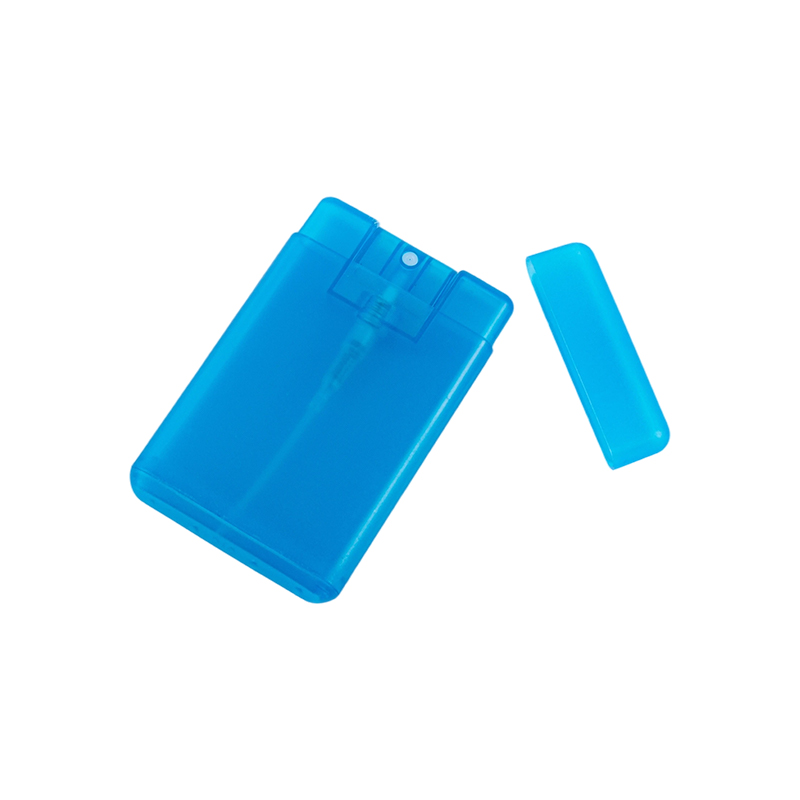
How to Optimize the Filling Line Efficiency for a Card Shape Spray Bottle with Snap-on Pump Designs?
Content
Mechanical Compatibility and Material Grade Selection
1. Polymer Selection for Structural Rigidity: To maintain high-speed throughput, the housing of a Card Shape Spray Bottle must possess sufficient Shore D hardness to resist deformation during the mechanical capping phase. Utilizing PETG or high-density PP ensures the chemical resistance of card shape spray bottle body remains stable when exposed to 75% ethanol or aromatic compounds. 2. Dimensional Tolerance and Tooling Precision: Achieving zero-down time on an automated line requires strict adherence to a +/- 0.1mm tolerance. In the PETG vs PP card shape spray bottle material comparison, PETG offers superior dimensional stability and transparency (92% light transmission), which facilitates easier liquid level detection via optical sensors during the filling process. 3. Snap-on Pump Engagement Force: The Card Shape Spray Bottle utilizing a snap-on mechanism requires a calibrated downward force (measured in Newtons). Engineering the interference fit between the pump housing and the bottle neck is critical to ensure a hermetic seal without causing stress cracks in the plastic resin.
Filling Line Automation and Sealing Mechanics
1. Vacuum Leakage Prevention Protocols: A primary technical concern for pocket atomizers is how to test card shape spray bottle leak-proof reliability. During high-altitude transport, a internal pressure differential occurs; thus, the assembly must pass a -0.05 MPa vacuum test. This reliability is built during the automated pressing stage of the snap-on pump. 2. Optimization of Nozzle Priming and Output: Efficient filling lines must account for the atomization uniformity of card shape spray bottle nozzles. Standard pumps are designed for a 0.05ml to 0.1ml dose per stroke. If the liquid viscosity is high, the pump's internal spring tension must be adjusted to prevent "weeping" at the actuator orifice. 3. Static Dissipation and Surface Energy: When executing UV printing on card shape spray bottle surfaces, the bottle must undergo corona treatment to increase surface energy. This ensures that the Ra surface finish is optimized for ink adhesion, preventing smudging as the bottles move through high-speed star wheels.
Optimization of Component Sealing and Pressure Testing
1. Structural Reinforcement Against Mechanical Stress: Because of its flat geometry, a Card Shape Spray Bottle experiences uneven pressure distribution. Analyzing why mechanical seal integrity varies in card spray bottles shows that the weld line of the bottle body must be strategically placed away from the snap-on contact points to avoid structural failure during the assembly of card shape spray bottle snap-on pumps. 2. Standardizing Filling Volumes and Headspace: To avoid hydraulic pressure buildup during the snap-on process, the filling volume optimization for 20ml card spray bottles should leave a 10% headspace. This "ullage" allows for liquid expansion at temperatures reaching 50°C without breaching the gasket seal. 3. Comparison of Pump Actuation Mechanisms: When evaluating crimp vs snap-on pump designs for card sprayers, the snap-on variant allows for faster assembly speeds on semi-automatic lines, provided that the snap-on engagement force is monitored through real-time torque and pressure sensors.
| Technical Specification | Polypropylene (PP) | PETG (Copolyester) |
| Chemical Compatibility | Excellent (Alcohols/Acids) | Good (Essential Oils) |
| Impact Strength (Notched Izod) | Moderate | High (Excellent Resistance) |
| Standard Deviation (Neck Fit) | +/- 0.15mm | +/- 0.08mm |
| Typical Output/Stroke | 0.08ml | 0.08ml |
Quality Control and Compliance for Industrial Logistics
1. Batch Traceability and Material Certification: For pharmaceutical or cosmetic applications, Card Shape Spray Bottle components must be accompanied by FDA compliant card shape spray bottle materials documentation. This ensures that no phthalates or heavy metals migrate into the solution during long-term storage. 2. Accelerated Aging and Stress Crack Analysis: Using the ASTM D1693 standard for card spray bottle stress cracking, engineers can predict the lifespan of the snap-on joint. Testing involves immersing the pressurized bottle in a surfactant at 50°C to simulate multi-year shelf-life. 3. Interfacial Tension and Nozzle Clogging: The long-term nozzle reliability of card sprayers is determined by the fluid's surface tension. If the surface tension is below 30 mN/m, the pump may require a specialized anti-leaking valve to ensure that the Card Shape Spray Bottle remains dry during inverted storage in a user's pocket.
Hardcore FAQ
Technical References
ASTM D4991: Standard Test Method for Leakage Testing of Empty Rigid Containers by Vacuum Method.
ISO 11433: Plastics - Determination of environmental stress cracking (ESC) of polyethylene.
CFR 21 Part 177.1520: FDA standards for Olefin polymers in contact with food and cosmetics.





All rights reserved © Shaoxing Shangyu Haibo Spray Plastic Co.,Ltd.Privacy OEM/ODM Spray Plastic Bottle & Pump Manufacturers
浙ICP备2021023122号