 English
 Español
 عربى
عربى 中文简体
中文简体

Cologne Travel Spray Bottle Sourcing: Leak Tests, Fill Volume, and MOQ Limits
Content
- 1 What Fill Volume Should a Cologne Travel Spray Bottle Hold?
- 2 PP, PETG or ABS: Which Resin Survives 80 Percent Ethanol?
- 3 Why Cologne Travel Spray Bottles Leak: Closure, Gasket and Dip Tube
- 4 Dosage, Actuation Force and Spray Quality: The Numbers to Put in a Purchase Order
- 5 Tube Format or Card Format for a Cologne Travel Spray Bottle?
- 6 MOQ, Tooling and Lead Time for a Custom Cologne Travel Spray Bottle
- 7 Cologne Travel Spray Bottle FAQ
A 10 ml cologne travel spray bottle that loses 0.2 ml a week through a bad seal will empty itself long before the fragrance inside goes off, and no retail buyer reorders an accessory that stains handbags. In practice, almost every travel atomizer that fails in the field fails at the neck finish, the gasket, or the wall thickness of a body that was tooled for water-based liquid and then filled with 80 percent ethanol.
The specification decisions below are the ones that separate a travel-size atomizer that survives a pressure change, a 12-month shelf life and a bag full of keys from one that leaks on the first trip. They apply whether you are buying 5,000 units of a stock 10 ml tube or commissioning a custom cologne travel spray bottle with your own outer profile.
What Fill Volume Should a Cologne Travel Spray Bottle Hold?
Ten millilitres is the volume most brands standardise on, and it is not a marketing accident. The 100 ml liquid limit enforced at airport security in the EU, the UK and the US turns 10 ml into exactly ten refills from a single allowance, which is the number that sells units on a shelf.
A body sold as 10 ml normally measures 11.5 to 12.5 ml to the shoulder, and the practical fill target is 80 to 85 percent of that figure. Fill a travel atomizer to the brim and the first warm car journey pushes liquid past the gasket; underfill it and the dip tube draws air while the bottle still looks half full, which customers read as a faulty pump.
- 5 to 8 ml: purse formats and gift-with-purchase sizes, where unit cost matters more than spray count.
- 10 ml: the default retail travel size and the easiest volume to certify against the 100 ml rule.
- 15 to 16 ml: weekender and card-type formats, usually sold in multi-packs rather than alone.
PP, PETG or ABS: Which Resin Survives 80 Percent Ethanol?
Polypropylene (PP) is the correct default for the wetted body of a cologne travel spray bottle. ABS belongs on caps, collars and decorative sleeves rather than on the liquid path, and PETG needs a verified barrier or a short contact-time claim before it goes anywhere near a fragrance concentrate.
The reason is straightforward chemistry. Fine fragrance is typically 60 to 90 percent ethanol by volume, and ethanol is a solvent for many polymers. PP resists it well and stays dimensionally stable; ABS crazes and stress-cracks after weeks of contact with high-proof juice; PETG delivers the clarity brands want but turns brittle where moulding stress sits, which is usually right at the neck thread.
| Resin | Ethanol resistance | Clarity | Correct use | Main risk |
| PP | Good | Translucent | Body, dip tube, collar | Low rigidity, needs wall thickness |
| PETG | Moderate | High | Visible bodies with liner or low-fill design | Stress cracking at the neck |
| ABS | Poor at high proof | Opaque, printable | Caps, sleeves, actuators | Craze and discolouration |
| PCR PP | Good, grade dependent | Grey to opaque | Recycled-content ranges | Batch-to-batch colour shift |
For alcohol-heavy formulas a compatibility soak is worth more than any datasheet: fill three samples, hold them at 40 C for two weeks, then re-measure the neck and weigh the loss. Material decisions are normally settled together with appearance and finish, because surface treatment changes chemical resistance almost as much as the resin does. First-time buyers usually run that decision alongside material selection rather than after tooling has been cut.
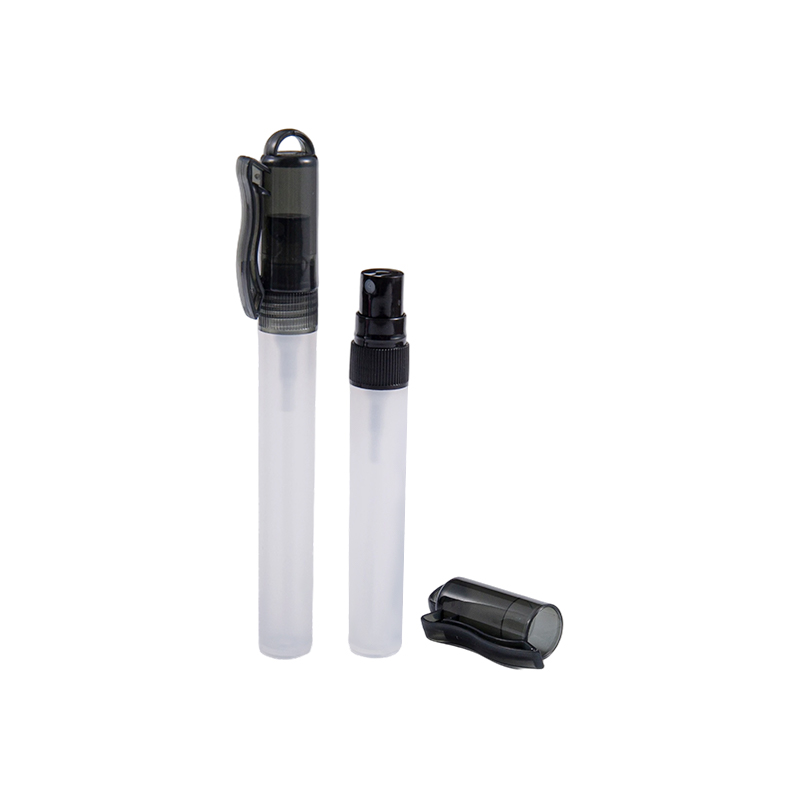 Hook-Type PP Perfume Spray Tube Set 8/10 mlHook-mounted PP spray tube set for on-the-go hanging access, featuring swivel hook, anti-touch lock and 0.15 ml output; relevant when assessing leak-path mechanical details.View Product →
Why Cologne Travel Spray Bottles Leak: Closure, Gasket and Dip Tube
The pump is rarely the leak path. On a correctly moulded 10 ml atomizer, the overwhelming majority of field failures trace back to three mechanical details: neck-finish tolerance, gasket compression, and a dip tube that has slipped off its seat.
- Neck finish: hold the thread and the sealing land within plus or minus 0.10 mm. A neck that is 0.15 mm oversized lowers gasket compression enough to weep inside a warm cabin.
- Gasket: LDPE is adequate for water-based mists, while silicone or a laminated EVA gasket is safer against ethanol. Shore hardness and thickness matter more than the material name on the drawing.
- Dip tube: cut it 1 to 2 mm above the base so it cannot seal against the bottom, and specify a wall that will not kink inside a 10 ml body.
- Closure: a crimped aluminium collar is the most reliable seal on a glass or hard-plastic neck; a screw closure is easier to refill but needs a defined torque window.
A travel atomizer should pass a 24-hour inverted leak test at 50 C and a 1.2 m drop test on ten units pulled from every cavity before the mould is signed off. Anything less is a warranty claim with a shipping label already attached.
Leak testing is cheap and fast. Fill ten units, invert them in a 50 C oven for a day, then weigh each one and inspect the closure for a wet ring. A weight loss above 0.5 percent over 24 hours means the gasket is not compressed, whatever the drawings say.
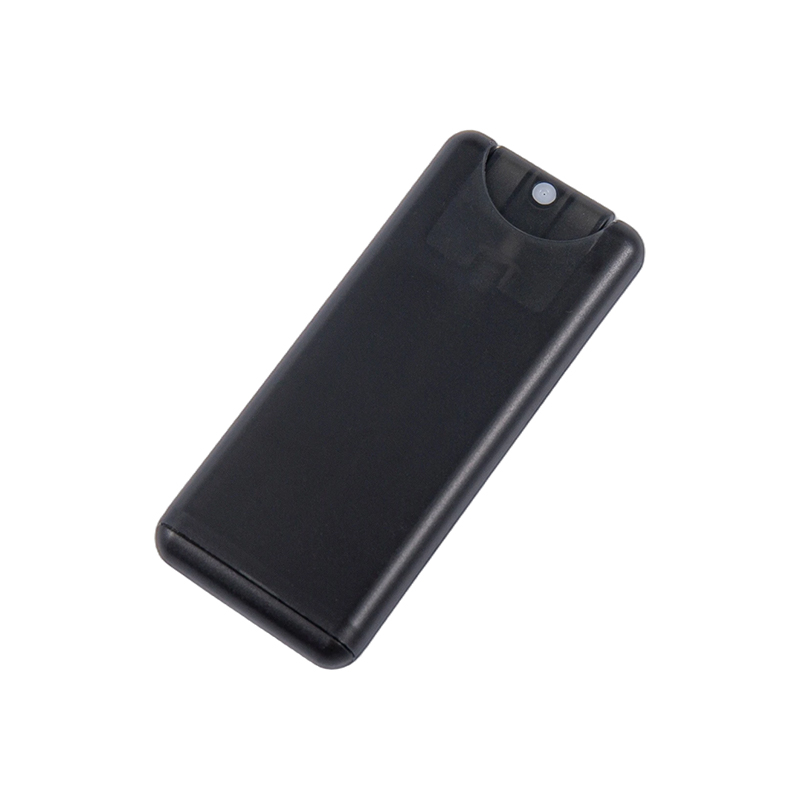 Ultra-Thin Card-Type PP Spray Bottle 10–16 mlUltra-thin card-style PP spray bottle for wallet or pocket, with 10–16 ml capacity and precise atomization; check leak testing and actuation dosage before ordering.View Product →
Dosage, Actuation Force and Spray Quality: The Numbers to Put in a Purchase Order
Write four numbers into the purchase order and most travel-atomizer arguments disappear: 0.05 to 0.10 ml per actuation, 15 to 25 newtons of actuation force, priming within three to five strokes, and shot-to-shot dosage variance inside 5 percent.
Dosage drives the economics of the whole product. At 0.07 ml per spray, a 10 ml bottle delivers roughly 140 sprays, which is about two weeks of twice-daily wear. Push the dosage to 0.13 ml and the same bottle empties in a week, which is why mist pumps and fragrance pumps are not interchangeable even when they share the same ferrule diameter.
Actuation force is the specification buyers most often forget. Below 15 N the pump fires accidentally inside a handbag; above 25 N, anyone with a long fingernail stops getting a clean press, and a spray cone that is too narrow reads as a weak product.
Tube Format or Card Format for a Cologne Travel Spray Bottle?
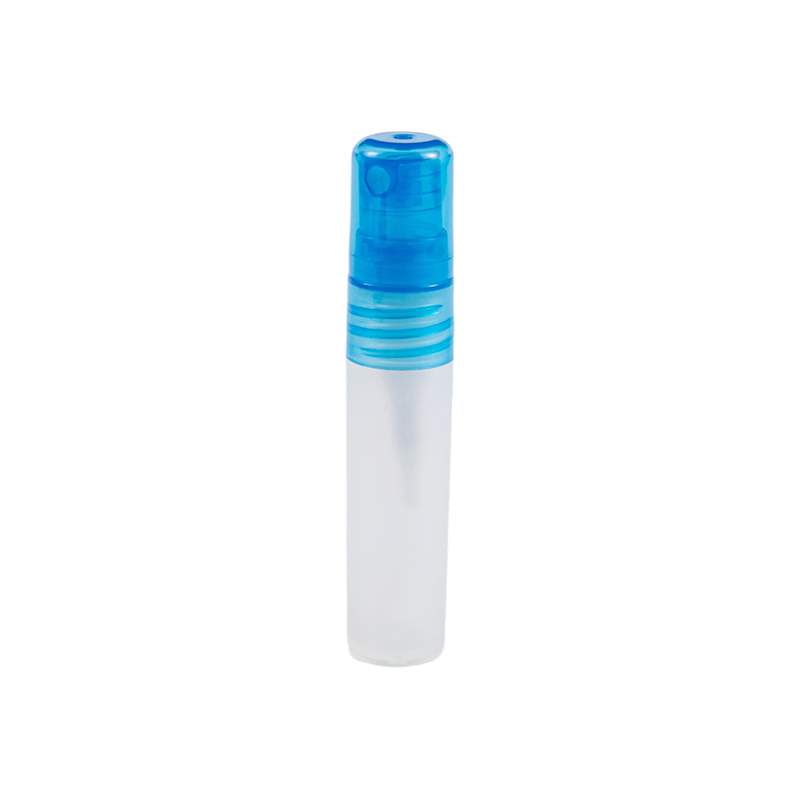
Tube atomizers win in travel retail and gift-with-purchase programmes; card-type bottles win in e-commerce sample packs because they stack flat and survive a mailer. That is a channel decision before it is a design decision.
Tube format
- 8 to 15 ml working capacity
- Hook or pen clip for pegboard display
- Narrow silhouette, high perceived value
- Best for gift sets and counter giveaways
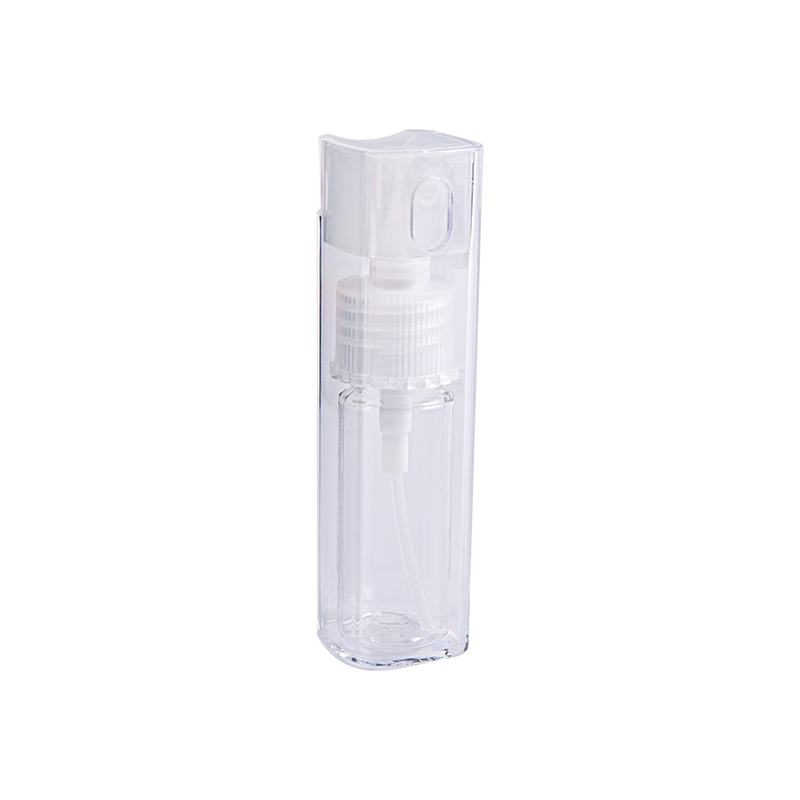
Card format
- 10 to 16 ml working capacity
- Flat and stackable for mailer boxes
- Wide front panel for printing
- Best for sample kits and subscription boxes
Both formats share the same internal hardware, so the switch is usually a body change rather than a pump change. The exception is the smallest purse size, where a shorter dip tube and a lower spring load keep the closure inside a 14 mm diameter envelope.
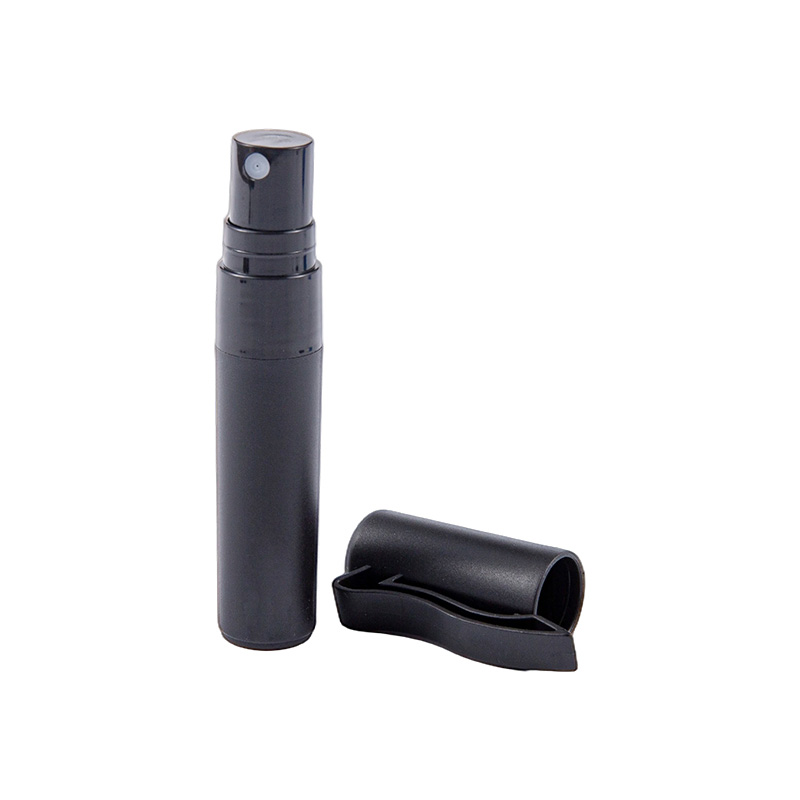 Pen-Clip PP Perfume Spray Tube Set 8–15 mlPen-clip PP perfume spray tube set in 8–15 ml, with slim one-hand bottle and 0.15 ml output; relevant for body-change and MOQ planning.View Product →
MOQ, Tooling and Lead Time for a Custom Cologne Travel Spray Bottle
Plan on 10,000 to 30,000 pieces as the realistic minimum against a stock mould, and roughly 25 to 35 days to first trial shot when new tooling is required, with mould cost typically between 3,000 and 8,000 USD per set. Below 10,000 pieces, most factories will not stop a machine for a colour change.
Two supply questions decide whether a travel-atomizer project stays on schedule. The first is whether the factory owns its own tooling and injection capacity, because outsourced moulds add two to three weeks to every revision. The second is how close the plant sits to a container port, since travel-size fragrance packaging usually ships in mixed cartons rather than full container loads.
Shaoxing Shangyu Haibo Spray Plastic Co., Ltd., founded in 1995 in Shangyu, Zhejiang, is one example of the supplier profile this kind of project needs. Its catalogue runs across perfume tubes, card-type spray bottles, lotion pumps and nail-polish pumps, it exports to the United States, Germany, Japan, Hungary and other EU markets, it maintains an in-house test laboratory, and it sits about 35 km from Ningbo Port. Buyers verifying that kind of claim should look at the factory floor rather than the brochure.
Cologne Travel Spray Bottle FAQ
Are cologne travel spray bottles allowed in hand luggage?
Yes, provided the container is marked 100 ml or less. A 10 ml or 15 ml atomizer sits well inside the limit, and the rule applies to the capacity of the bottle, not to how much liquid is left in it.
How many sprays does a 10 ml travel atomizer give?
At a typical fragrance dosage of 0.07 ml per actuation, a 10 ml bottle delivers roughly 140 sprays. If a supplier quotes 0.13 ml per stroke, expect around 75 sprays from the same fill volume.
Can you refill a cologne travel spray bottle from a full-size bottle?
Yes. Most travel atomizers fill from the bottom through a nozzle adapter, or by unscrewing the collar. Bottom-fill versions lose less fragrance to evaporation; screw-fill versions are easier to rinse between different scents.
What is today's minimum order quantity for a custom travel spray bottle?
Expect 10,000 to 30,000 pieces against an existing mould and 30,000 or more for a new profile, plus tooling charges. Colour changes usually carry a lower minimum than a brand-new body shape.
related products







All rights reserved © Shaoxing Shangyu Haibo Spray Plastic Co.,Ltd.Privacy OEM/ODM Spray Plastic Bottle & Pump Manufacturers
浙ICP备2021023122号