 English
 Español
 عربى
عربى 中文简体
中文简体

Cosmetic Spray Packaging: Choosing Bottles, Pumps, and Materials for Reliability
Content
- 1 Anatomy of a Cosmetic Spray Package
- 2 Material Compatibility: The Most Overlooked Risk
- 3 Pump Selection: Matching the Mechanism to the Product
- 4 Bottle Types: From Card-Style Travel Bottles to Perfume Tubes
- 5 Customization and Decoration Capabilities
- 6 What to Verify in a Cosmetic Spray Packaging Supplier
- 7 Practical Considerations Before Placing an Order
Cosmetic spray packaging fails in one of three ways: the pump leaks during transit, the nozzle clogs after a month of use, or the plastic reacts with the formula and causes discoloration. Each of these failures costs money, damages brand reputation, and leads to customer complaints that are difficult to reverse. The root cause is almost never the product itself, but rather a mismatch between the packaging components and the liquid they are meant to dispense. This article walks through the key technical and commercial decisions involved in sourcing cosmetic spray packaging, starting with the conclusion: a reliable spray package depends on three things — material compatibility, pump mechanism selection, and supplier verification. Get those right, and most common packaging failures are avoidable.
Anatomy of a Cosmetic Spray Package
A cosmetic spray package is a system of three components that must work together: the container, the pump or spray head, and the closure or cap. While many buyers focus only on the visual appearance of the bottle, the pump mechanism is the most failure-prone component and therefore deserves the most attention during sourcing.
Pumps used in cosmetic packaging typically use one of two actuation mechanisms: a spring-driven piston that draws liquid up a dip tube, or a crimped aerosol-style valve. The vast majority of lotion and toner sprays in the skincare market use the former, while aerosol valves are reserved for products that require a fine mist with propellant. Between these two extremes, there are also continuous spray bottles that use a pre-compressed mechanism to deliver an even mist without propellant gas, which are increasingly common in facial mist and setting spray products.
The bottle itself is more than a decorative shell. Its neck finish must match the pump's caliber, its wall thickness determines whether the bottle can withstand the pressure of repeated pumping sessions, and its resin type determines whether the bottle is compatible with the formula inside. This is why it is rarely a good idea to source bottle and pump separately from two different suppliers without first checking compatibility — the specifications are tightly interrelated.
Material Compatibility: The Most Overlooked Risk
The first question a packaging buyer should ask is not "what does the bottle look like?" but "what is going inside the bottle?" The chemical composition of the formula determines which plastic resin is safe to use, and getting this wrong can lead to packaging failure at scale.
Three materials dominate cosmetic spray packaging today:
| Resin | Key Properties | Typical Cosmetic Applications | Limitations |
|---|---|---|---|
| PP (Polypropylene) | Chemical resistance, flexible, lightweight, cost-effective | Toners, lotions, makeup removers, perfumes | Lower clarity compared to PETG or glass |
| PETG | Glass-like clarity, good impact strength | Premium serums, facial mists, showcase packaging | Lower chemical resistance than PP for strong solvents |
| ABS | Rigid, durable, good surface finish for decoration | Cap closures, decorative covers, some bottle bodies | Not inherently chemical-resistant; often used for external parts |
The practical implication is straightforward: a formula with a high alcohol content, such as perfume or astringent toner, requires a resin that will not swell, cloud, or leach over time. PP is a reliable baseline, while PETG is often shortlisted for products that need a premium transparent look but do not contain aggressive solvents. For formulas with unusual pH levels or solvent loads, a material compatibility test is the safest step before finalizing the packaging design.
For sustainable packaging initiatives, PCR (post-consumer recycled) plastic is becoming part of the conversation. However, PCR materials are not identical to virgin resin in every property, and structural integrity can vary depending on the recycling stream and the percentage of PCR content. If a brand commits to a certain PCR percentage, the pump and bottle combination should be re-tested under the same conditions as the virgin-material version. This point is covered in more detail in a dedicated technical analysis of PCR plastic spray bottle structural integrity on the company blog.
Pump Selection: Matching the Mechanism to the Product
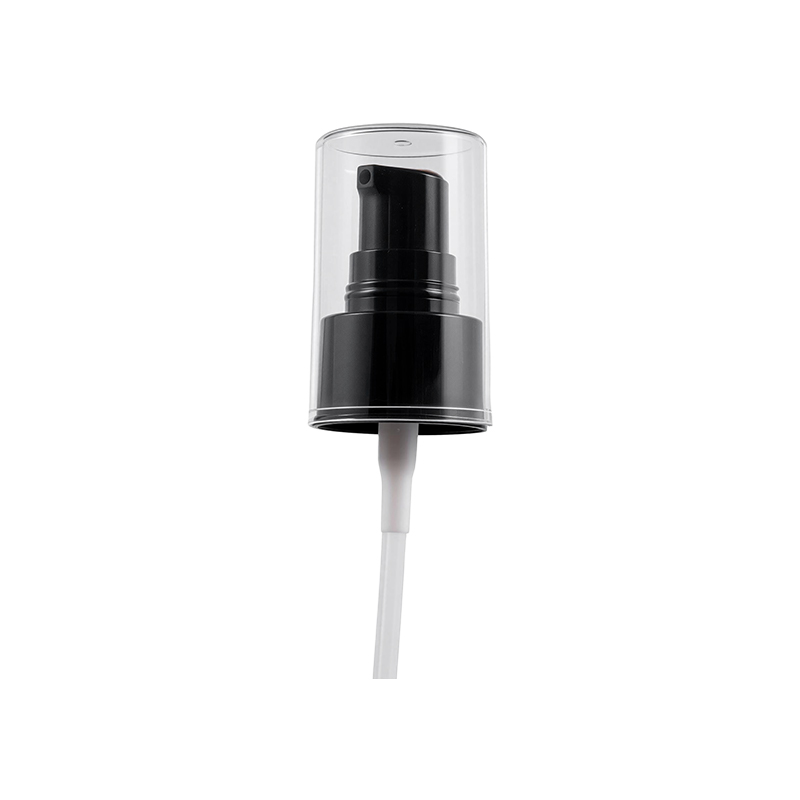
Once the resin is chosen, the next decision is the pump. Cosmetic pumps are categorized primarily by caliber — the diameter of the neck opening they fit. The most common calibers in the market are 24mm, 28mm, and 32mm. A 24mm pump fits a smaller bottle neck and is typically paired with products that require a smaller dose per actuation, such as facial mists. A 32mm pump has a larger body and can deliver more liquid per stroke, which is why it is often used for body lotions or makeup removers that need a generous amount of product per use.
But caliber alone does not determine pump performance. The spring tension inside the pump, the diameter of the dip tube, and the internal seal design all affect how much product is dispensed per stroke and how consistent that amount remains over the life of the bottle. In a pump dispenser dosage calibration test, variation in spring tension was shown to change the output per stroke by a measurable margin, which matters for products like serum drops where the user relies on a predictable dose. When a pump delivers too little, users press twice and use more product than intended; when it delivers too much, the product runs out faster and customers assume they were under-filled.
Lotion Pumps vs. Spray Pumps vs. Powder Pumps
There is a common misconception that any pump can handle any liquid. In reality, the pump internals must be matched to the viscosity of the product:
- Lotion pumps are built for thicker liquids such as body lotion, sunscreen, or makeup remover. They typically have larger internal channels and a stronger spring to draw the product upward.
- Fine-mist spray pumps are designed for low-viscosity liquids like facial toners, setting sprays, and perfumes. They rely on a swirl chamber in the nozzle to atomize the liquid into fine droplets.
- Powder pumps use a different internal geometry that can handle dry, free-flowing powders without clumping or clogging, and are available in external-spring and internal-spring configurations.
The distinguishing structural feature of these pump families is where the spring sits. An external spring is isolated from the product, which is a safer choice for formulas that might corrode metal. An internal spring is in direct contact with the liquid, which can cause problems if the formulation is acidic or contains certain salts. For this reason, corrosion-resistant pumps are a sensible specification for makeup removers or nail polish removers that contain acetone or other solvents. A corrosion-resistant and chemical-solvent-resistant lotion pump is designed specifically to avoid spring and seal degradation when used with challenging formulas.
Bottle Types: From Card-Style Travel Bottles to Perfume Tubes
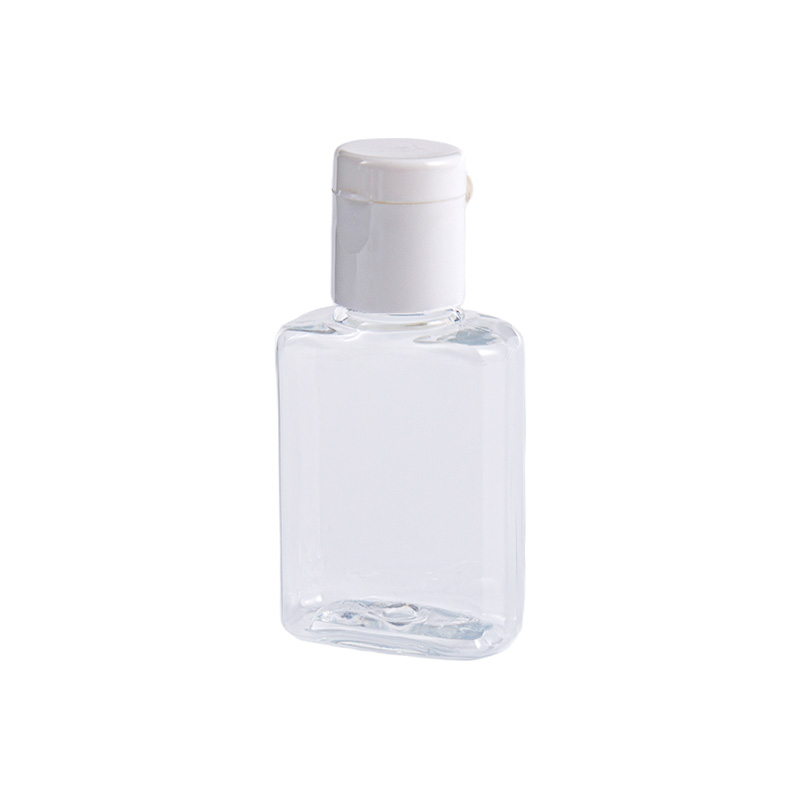
Bottle selection is as much about the user journey as it is about the chemical and mechanical requirements. The same toner formula could be sold in a 200ml desk bottle, a 30ml travel spray, or a 10ml card-shaped sample. Each format serves a different shopper need, and the packaging must be adapted accordingly.
Card-Style Spray Bottles for Travel and Sampling
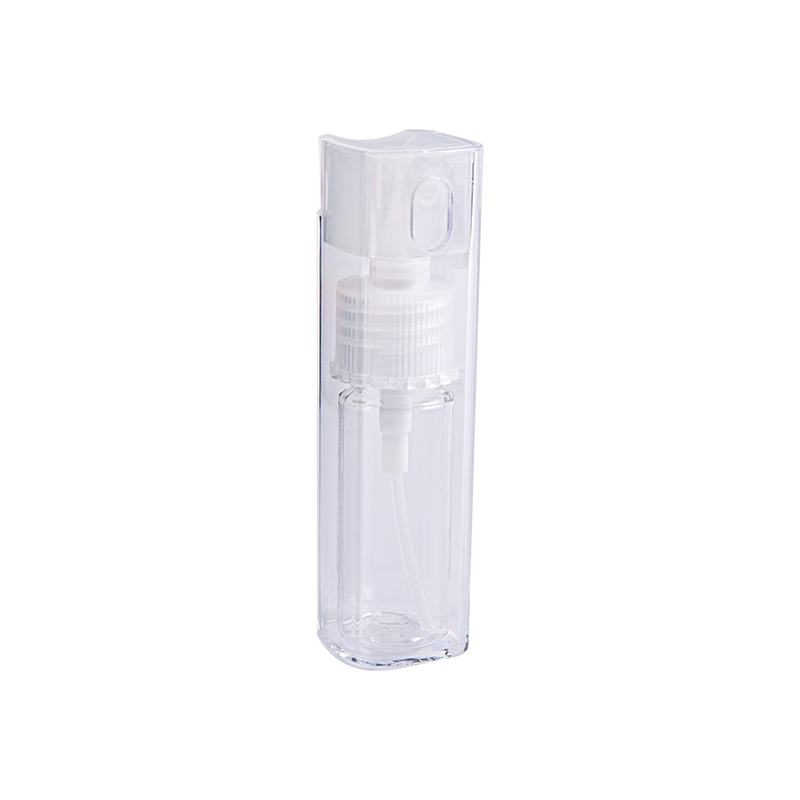
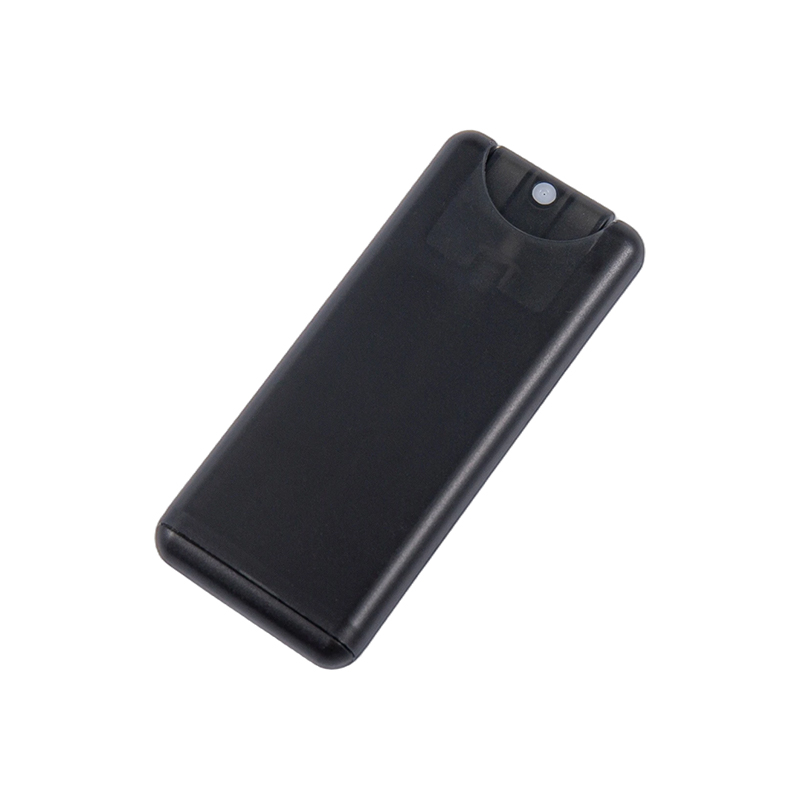
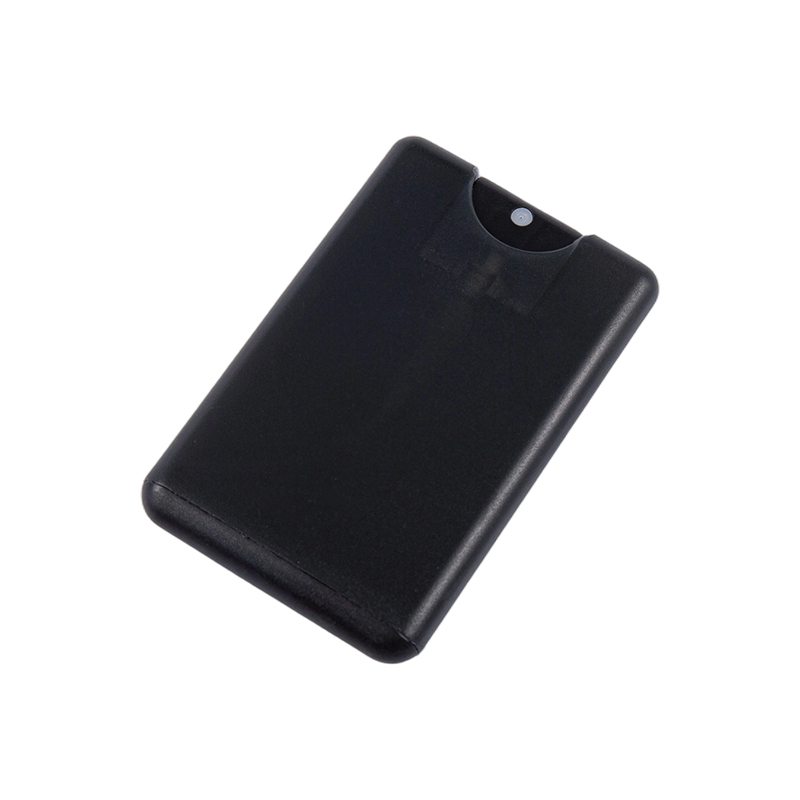
Card-style (or card-shaped) spray bottles are a growing format in the market, largely because they answer a clear consumer need: portable, flat, leak-resistant packaging that fits in a pocket or wallet. Card spray bottles are typically produced in PP, ABS, or PETG, and range in capacity from about 10ml to 2L depending on the design. For brands launching samplers or travel-sized versions of an existing product, the card format offers a practical alternative to the conventional cylinder bottle. The company's small-capacity card-type PP spray bottle in 10–16ml is an example of a compact dispensing format that fits into this category.
From a production standpoint, card-style bottles are not simply smaller versions of standard bottles. The flat profile changes how the dip tube sits inside the container, how the pump draws liquid, and how the bottle behaves when nearly empty. In a card-shape spray bottle atomization and actuation evaluation, the geometry of the bottle was shown to affect the consistency of the spray output, which is why testing the actual bottle-pump combination is essential rather than assuming a standard pump will perform identically in every container.
Perfume Spray Tubes for Portability
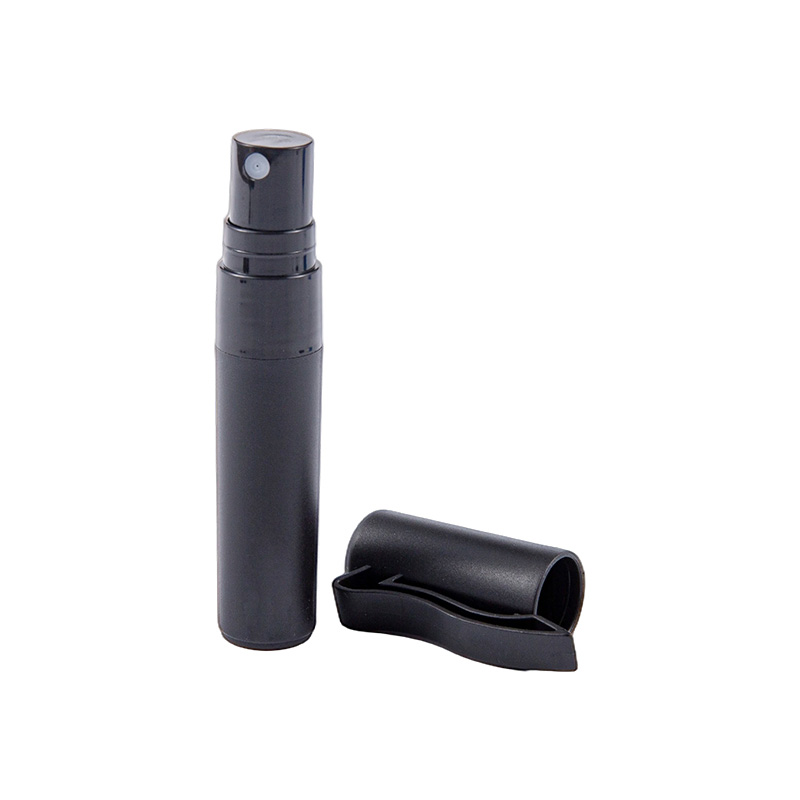
Perfume was one of the first product categories to adopt slim, portable spray formats, and the mechanics behind those formats are worth understanding. A typical perfume spray tube is a small PP cylinder with a dip tube and a spray cap, commonly found in 8–15ml sizes. These can be fitted with a hook, a pen clip, or a hanging loop, which makes them easy to attach to a bag strap or a keychain. For brands selling roll-on or splash perfume, switching to a spray tube is a visible functional upgrade that also reduces product waste, since a fine mist covers a larger skin area with less liquid. The portability of this packaging format is one reason it is a strong candidate for promotional giveaways and hospitality amenities.
Customization and Decoration Capabilities
Almost every cosmetic brand eventually reaches the point where a stock bottle with a standard label is not enough. Differentiation matters at the shelf, and packaging is the most direct carrier of brand identity. Fortunately, the structural components of cosmetic spray packaging — bottle, cap, and pump — can each be customized in ways that are compatible with high-volume production.
Appearance customization covers the shape of the bottle body, the surface texture, and the design of the cap or actuator. A matte finish suggests a natural or premium positioning, while a high-gloss finish reads as more mainstream and clean. Color customization can be achieved either by using colored resin or by coating the surface, and the right choice depends on the volume and the target cost. If the plan is to create a signature color that is consistent across a whole product line, specifying a color standard during the mold and production stage is preferable to relying on secondary painting operations, which can be less uniform.
Functional upgrades go beyond appearance. Changing the pump's output volume, adding a locking mechanism to prevent accidental spraying in transit, or modifying the dip tube length to maximize liquid usage are all possible with the right mold and engineering support. Material selection also leaves room for differentiation: the same bottle design can be produced in PP, PETG, or ABS depending on whether clarity, chemical resistance, or surface hardness is the priority. A supplier with in-house mold development and a structured customization workflow — from customization solutions for bottle appearance, color, function, and material — can reduce the time between concept and production significantly.
What to Verify in a Cosmetic Spray Packaging Supplier
The quality of a cosmetic spray bottle is a function of both its design and its manufacturer. Since most brands do not have their own molding or assembly lines, the supplier's production capabilities and process controls become the brand's de facto quality system. Before committing to a purchase order, a buyer should confirm at least four aspects of the supplier's operation.
Production capacity reveals whether the supplier can scale with your growth. A supplier that runs one injection molding machine part-time may be able to handle a 5,000-piece pilot run, but it will struggle with a 500,000-piece seasonal order. Figures such as annual tonnage or daily output across product series are a clear indication of the production base.
Testing procedures determine how many defective pieces reach your packing line. A supplier with an in-house test lab should be able to provide data on spray output consistency, leak testing, and pump cycle life. It is also worth asking how the supplier handles batch-to-batch variation in resin color or pump actuation force, because even small variations can become visible when a customer opens a new bottle and compares it with the previous one.
Relevant experience in the cosmetic segment shortens the learning curve. A packaging supplier whose core business is cleaning chemicals might not appreciate the aesthetic requirements of a premium skincare spray. The difference shows up in small but important details: the crispness of the logo deboss, the clarity of the resin, the smoothness of the actuator stroke. Asking the supplier about their experience with beauty-focused exhibitions or their existing product series for the cosmetics segment is a practical way to assess this — participation in specialist trade shows such as Cosmoprof Asia is one signal of a genuine commitment to the beauty industry.
Shipping and logistics matter more than most buyers realize. A cosmetic spray bottle is a low-density, high-volume product, so freight costs can surprisingly become a significant share of the total landed cost. A supplier located close to a major port can reduce inland transport time and avoid some of the delays that affect inland factories. Geographic proximity to a large port is particularly valuable when a brand uses just-in-time replenishment rather than carrying months of inventory.
Practical Considerations Before Placing an Order
Beyond the technical and supplier-related aspects, there are a few operational details that can determine whether a cosmetic spray packaging project stays on schedule and on budget.
- Minimum order quantities (MOQs): pump components and bottle bodies often have different MOQs, and the larger of the two will constrain your initial order size. Verify this early in the conversation.
- Sampling lead time: a physically representative sample — not a 3D render — is worth waiting for, especially for the first production run. The sample should be filled with a placebo formula that has similar viscosity and chemical properties to the real product.
- Mold ownership: if you pay for a custom mold, make sure the contract clearly states that the mold is owned by you, not by the supplier. This protects your ability to move production elsewhere in the future.
- Cap and pump compatibility across suppliers: if you are sourcing caps from one vendor and bottles from another, verify the thread pitch and sealing surface dimensions before committing to full-scale production. A small mismatch in thread depth can produce a cap that fits on the first bottle but cracks on the tenth.
Cosmetic spray packaging is rarely the most glamorous part of a beauty brand's go-to-market plan, but it is one of the most consequential. The right combination of resin, pump mechanism, and bottle format protects the formula, delivers a satisfying user experience, and supports the brand's positioning at the point of sale. A concise reference on cosmetic spray pump types, selection, and applications can serve as an ongoing reference for procurement teams that deal with this category only occasionally.
When the packaging works as intended, nobody notices it. When it fails, everybody does. Investing the time to evaluate the full system — from resin chemistry to pump spring tension to supplier testing protocols — is what separates a cosmetic spray package that protects the brand from one that undermines it. If you are evaluating a new product launch or reformulating an existing line, contact the packaging team to request samples and discuss specifications before finalizing the design.





All rights reserved © Shaoxing Shangyu Haibo Spray Plastic Co.,Ltd.Privacy OEM/ODM Spray Plastic Bottle & Pump Manufacturers
浙ICP备2021023122号