 English
 Español
 عربى
 中文简体


Heavy Duty Spray Bottles for Chemicals: Material, Seal, and Specification Guide
Content
- 1 What Makes a Spray Bottle Heavy Duty for Chemicals
- 2 Four Failure Points That Decide Whether the Package Survives
- 3 How Solvent Aggressiveness Changes the Polymer Decision
- 4 Polymer Compatibility at a Glance
- 5 Pumps, Gaskets and Springs: The Hidden Chemistry
- 6 Specification Checklist for Heavy Duty Spray Bottles
- 7 Tooling, MOQ and Lead Time: What Chemical Buyers Should Expect
- 8 Frequently Asked Questions
A 70% isopropanol disinfectant will destroy a standard hand sprayer in about three weeks. The nitrile gasket swells, the 304 stainless spring pits, and the trigger drips between strokes. That failure pattern is why heavy duty spray bottles for chemicals are specified around chemistry first and geometry second, and why the cheapest quotation often becomes the most expensive package on the shelf.
Most packaging quotes still open with the neck finish and the output volume. Both matter, but they sit downstream of a more basic question: does every wetted material survive the fill through the full shelf life and use cycle? Answer that first and the rest of the specification becomes straightforward.
What Makes a Spray Bottle Heavy Duty for Chemicals
A heavy duty chemical spray bottle is a package in which every wetted material is chemically compatible with the fill and the closure geometry holds that seal across the full shelf life and use cycle. Wall thickness, colour and an industrial look are secondary considerations.
Working definition: heavy duty describes a chemical resistance specification, not a strength rating. A 500 ml PP bottle with an FKM seal can be heavy duty. A thick-walled ABS bottle with a nitrile gasket is not.
Four material layers must be matched to the formulation before the first sample is moulded:
- Bottle polymer - must resist permeation, swelling and environmental stress cracking under the fill.
- Seal elastomer - the gasket, plug or liner at the closure interface, and the part most solvent formulas attack first.
- Metal contact parts - springs, ball valves and any metal that touches liquid or vapour.
- Closure geometry - neck finish, thread engagement, venting and torque retention after repeated opening.
Get these four right and the package passes a 12-month stability test without drama. Get one wrong and the failure appears at the customer, not in the lab.
Four Failure Points That Decide Whether the Package Survives
Almost every chemical spray bottle complaint traces back to one of five failure modes, and each one has a specification fix you can write directly into the purchase order.
| Failure point | Typical trigger | Specification fix |
| Gasket swelling | Alcohols, D-limonene, terpene cleaners | Switch to FKM or PTFE-encapsulated seal |
| Spring corrosion | Bleach, chloride solutions, acidic descalers | Replace 304 with 316 stainless or a plastic-encapsulated spring |
| Bottle stress cracking | Surfactant concentrates, high-alcohol blends | Move from PETG or ABS to HDPE or clarified PP |
| Trigger leakage between strokes | Viscosity above roughly 50 cPs, gels | Replace the trigger with a calibrated lotion pump |
| Permeation weight loss | Aromatic and chlorinated solvents | Add a barrier layer or specify fluorinated HDPE |
Specify the chemistry before the closure. The neck finish is a constraint you inherit; the elastomer is the decision you make.
How Solvent Aggressiveness Changes the Polymer Decision
Rank the formula by solvent family before opening any bottle catalogue, because the same 500 ml container that handles hand soap for a decade will fail against xylene in a month. The index below is a relative pre-screening tool used to sort formulas by how hard they push on the polymer.
Anything above an index of roughly 70 forces a polymer change or a barrier solution. Between 30 and 70, the bottle body usually survives but the seal and spring become the weak points, which is why alcohol-based sanitisers fail at the pump rather than the wall.
Test method matters as much as the material. Run ASTM D543 or ISO 175 immersion at the real use temperature, weigh the samples at 7 and 28 days, and check for crazing under a light box rather than by eye alone.
Polymer Compatibility at a Glance
There is no single best plastic for chemical packaging. Each polymer wins in one solvent family and loses in another, so the table below is a screening shortcut rather than a final answer.
| Polymer | Strong against | Weak against | Typical use |
| PP | Alcohols, acids, bases, aqueous cleaners | Aromatics, chlorinated solvents, strong oxidizers | 250 ml to 1 L spray bottles, pump bodies |
| HDPE | Bleach, surfactants, general aqueous fills | Aromatic hydrocarbons, oxygenated solvents | Bulk chemical containers, refill packs |
| PETG | Clarity plus moderate alcohol content | Ketones, aromatics, high-alcohol stress cracking | Cosmetic-grade clear packs |
| ABS | Rigidity and premium surface finish | Alcohols and most solvents | Low-solvent or dry applications |
When the formula sits between two polymers, ask for a material selection review before tooling is cut. A compatibility trial costs a few weeks; a failed mould costs a season.
For alcohol-based sanitisers, hard-surface cleaners and detergent concentrates in the 300 ml to 1 L range, a moulded 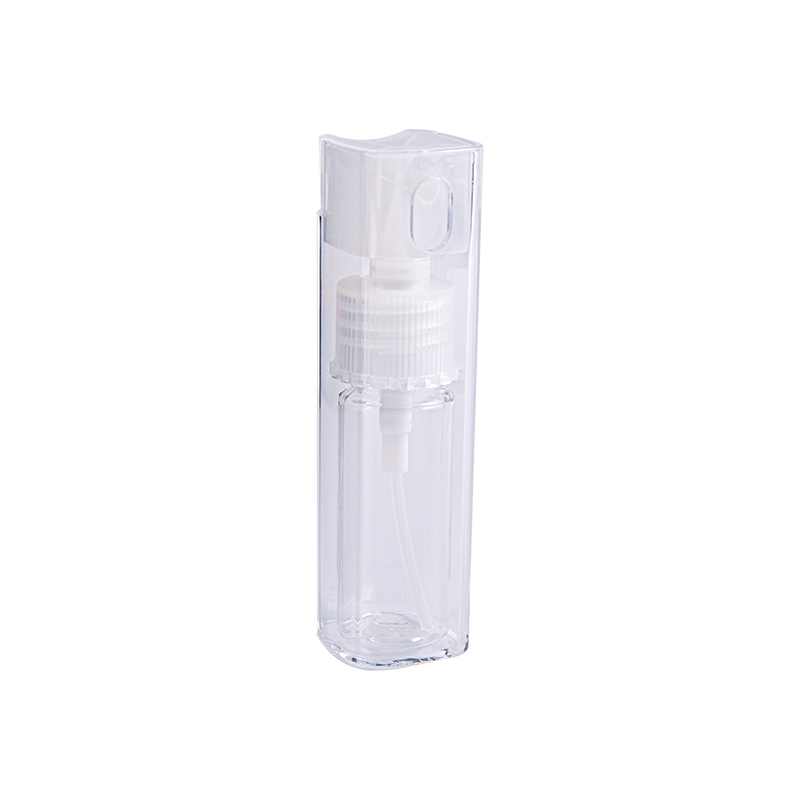 Precision Plastic Spray Bottle for Fine Liquid DispensingCompact 10–40 ml spray bottle with PET or glass inner bottle, ABS shell, and 0.07 ml micro-spray options for cosmetics, personal care, and reagents.View Product → paired with the right seal is usually the fastest route to a stable package.
Pumps, Gaskets and Springs: The Hidden Chemistry
In most solvent-based fills the internal spring fails before the bottle does, so the pump specification deserves more attention than the container. A corrosion-resistant lotion pump designed for chemical and solvent-resistant duty replaces the standard spring set and seal with materials chosen for aggressive fills.
Three structural choices drive pump selection:
- Neck finish - 24/410, 28/410 and 32/410 cover most chemical and personal care fills without new tooling.
- Dosage per stroke - fine mist outputs of about 0.1 to 0.2 ml suit disinfectants, while lotion pumps delivering 1.0 to 1.4 ml suit gels and creams.
- Wetted materials - dip tube polymer, ball valve, spring alloy and seal compound all appear on the drawing and all should be named.
Viscous and fast-evaporating fills such as nail polish remover need a different architecture again, with 24 mm, 28 mm and 32 mm calibre pumps that meter small, precise doses without solvent loss at the nozzle.
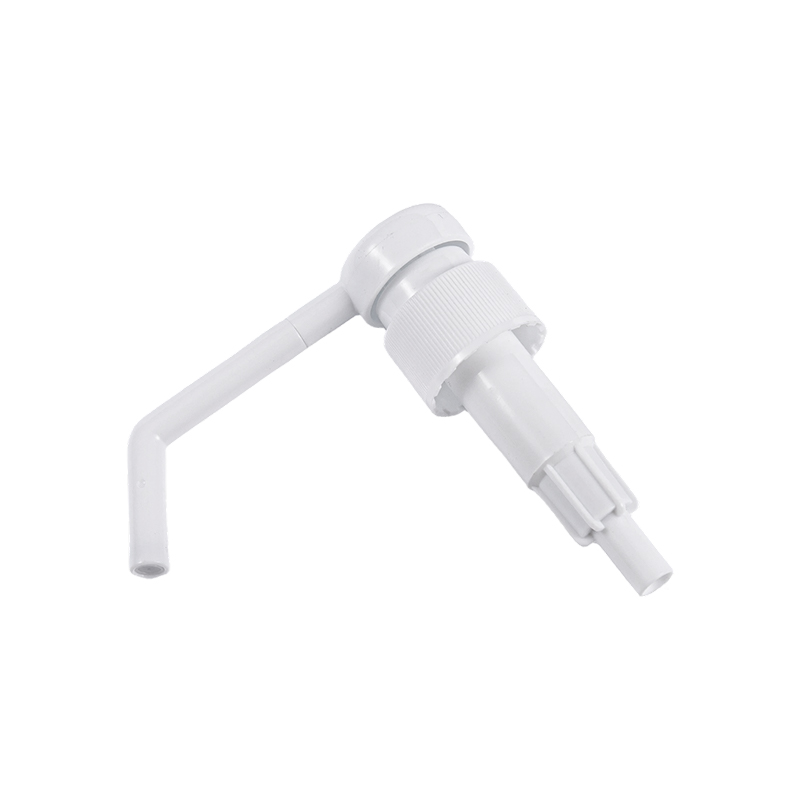 Corrosion-Resistant Lotion Pump for Solvent and Disinfectant DispensingChemical-resistant pump with medical-grade PP and stainless-steel spring options, 1–3 cc doses, and angled no-splash nozzle for disinfectants and aggressive fills.View Product →
Write the elastomer and the alloy on the drawing by name. A specification that says only "standard pump" transfers the chemical risk from the supplier to you.
Specification Checklist for Heavy Duty Spray Bottles
Lock these eight items before tooling starts and the sampling round usually closes in one or two iterations rather than five.
- Full fill chemistry, including solvent percentage, pH and any abrasive or oxidising component.
- Temperature range from warehouse storage to end use, including transport in summer containers.
- Target viscosity measured at filling temperature, not at room temperature in the lab.
- Dose per stroke and number of strokes per single use.
- Neck finish and thread standard, stated as a number such as 28/410.
- Seal elastomer and spring alloy named individually on the component drawing.
- Leak and vacuum test conditions with pressure, duration and pass or fail limits.
- Drop test, torque retention and shelf-life requirements for the finished pack.
Buyers who bring a completed checklist to the first meeting cut weeks from development, because the supplier can quote a specific configuration instead of guessing at three possible ones.
Tooling, MOQ and Lead Time: What Chemical Buyers Should Expect
Standard heavy duty spray bottle configurations usually need no tooling at all, and custom moulds only pay back above roughly 50,000 units per year. That makes the standard neck finish family the practical starting point for most chemical projects.
Shaoxing Shangyu Haibo Spray Plastic Co., Ltd. has produced spray and pump packaging since 1995, running seven product series and more than 100 variants from a site 35 km from Ningbo Port, with exports to the United States, Germany, Japan, Hungary and other EU markets. The company develops parts from customer drawings or samples and runs its own testing laboratory, which means chemical compatibility trials can be handled before a mould is committed.
Bulk and refill formats change the economics again. Concentrated cleaners shipped in 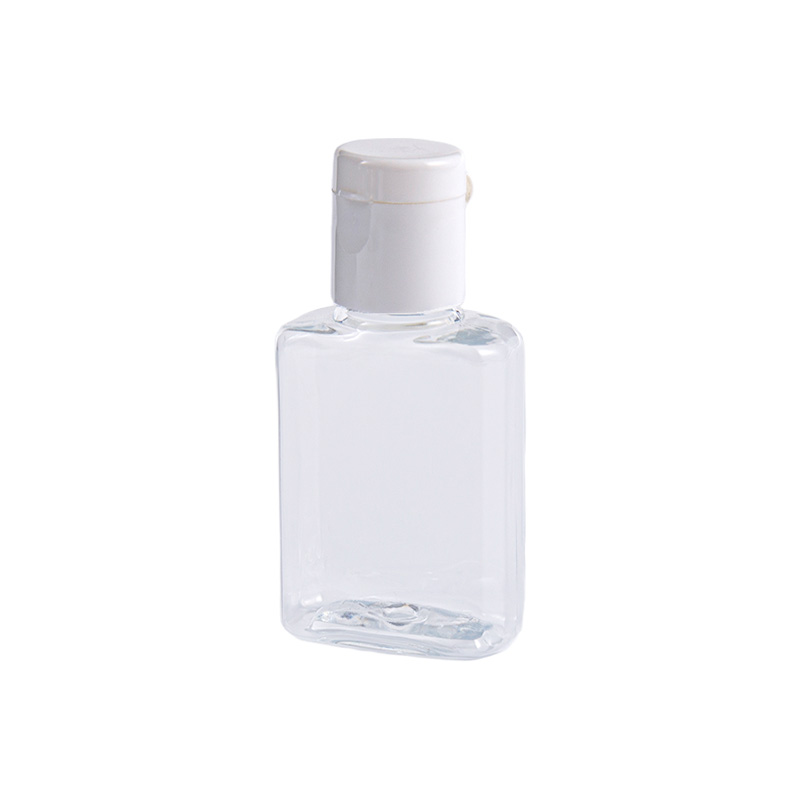 15 ml Clear PET Sample Bottle with ABS CapCrystal-clear PET bottle with secure ABS cap, suited to cosmetic samples, travel sizes, and small-batch liquids compatible with water- or oil-based formulas.View Product → reduce freight per litre and let the end user dilute at the point of use, which lowers packaging weight without lowering the chemical resistance requirement.
Frequently Asked Questions
Are heavy duty spray bottles for chemicals always made of HDPE?
No. HDPE is the default for bleach, surfactants and aqueous cleaners because it resists environmental stress cracking well, but PP is the better choice for alcohols and acids, and PETG or ABS should be avoided with high-solvent fills. The polymer follows the chemistry, not the other way round.
Can a standard trigger sprayer handle bleach or acidic descalers?
Not for a full shelf life in most cases. Standard 304 stainless springs pit quickly in chloride solutions, and the leak usually appears at the valve rather than the bottle. Specify 316 stainless or a plastic-encapsulated spring when the fill contains bleach or acid.
How should I test a chemical spray bottle before committing to a full order?
Run 28-day immersion testing at the real use temperature following ASTM D543 or ISO 175, weigh the samples at 7 and 28 days, then fill and drop-test finished units. A trial run of a few hundred pieces costs far less than a returned container load.
Does a corrosion-resistant pump cost significantly more?
Unit cost is higher than a standard lotion pump because FKM seals and 316 stainless springs carry a material premium, but the difference is small next to the cost of a field failure, a product recall or a customer claim. For aggressive fills it is the cheaper option over a two-year horizon.
Sourcing heavy duty spray bottles for chemicals works best as a joint exercise between the formulator and the packaging supplier. Send the fill chemistry, the viscosity, the dose and the test standard, and ask for the seal and spring specification in writing before samples are made.
If the project involves an aggressive solvent, a viscous gel or a new export market, contact the packaging team with the formula sheet and the target fill volume, and the compatibility work can start before the first purchase order is raised.
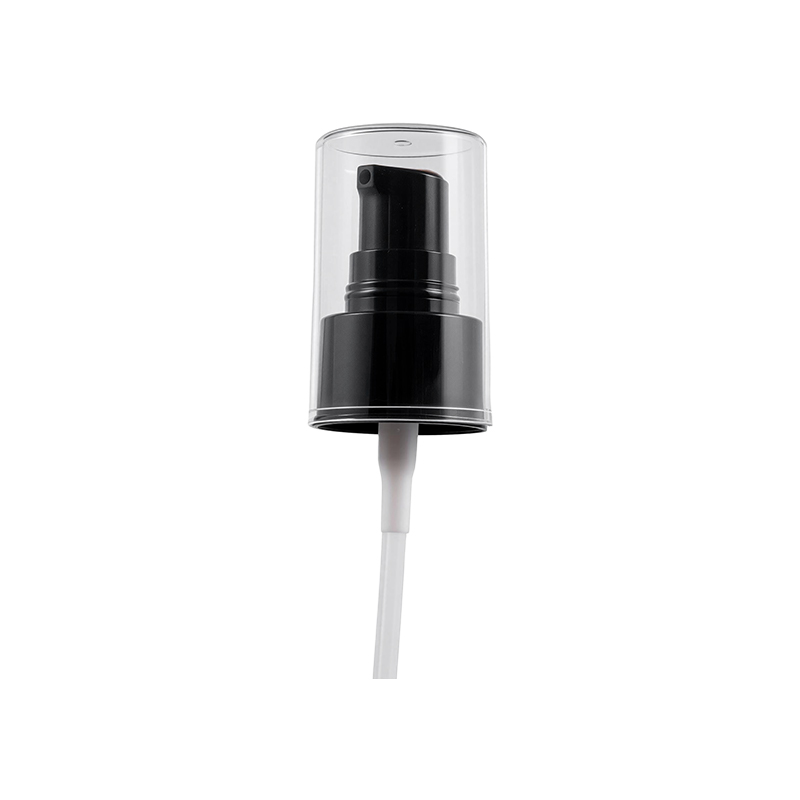







All rights reserved © Shaoxing Shangyu Haibo Spray Plastic Co.,Ltd.Privacy OEM/ODM Spray Plastic Bottle & Pump Manufacturers
浙ICP备2021023122号