 English
 Español
 عربى
عربى 中文简体
中文简体

Chemical Resistant Spray Bottles: Material & Sourcing Guide for Harsh Formulas
Content
Chemical resistant spray bottles are not one product category. They are an engineering decision shaped by the polymer of the bottle, the material of the pump, and the exact chemistry of your formula. A conventional PP spray bottle that survives 70% ethanol for months may swell, crack, or leak within days once acetone or ethyl acetate enters the mix. For manufacturers of cosmetics, home care products, or industrial cleaners, this difference decides whether a new SKU reaches shelves or becomes a return-rate problem.
What Makes Chemical Resistant Spray Bottles Different?
There is no universal chemical resistance rating. Resistance is always pair-specific: a polymer that resists acids may swell in ketones, and a seal that survives ethanol can soften in isopropyl alcohol. In spray packaging, three components carry the load.
- Container body polymer - controls structural integrity and dimensional stability under solvent contact
- Pump springs and seals - determine leak resistance and usable service life
- Closure design - prevents solvent vapor from reaching the threads and gaskets
Chemical resistant spray packaging means the container and its dispensing mechanism remain dimensionally stable, leak-free, and fully usable after sustained contact with a specific formula at a working temperature.
The practical implication is straightforward. Before selecting a spray bottle, define the exact solvent profile of your product. If the formula contains ketones, esters, or chlorinated hydrocarbons, the standard polypropylene bottle will most likely underperform. Concentration also matters: a formula with 20% acetone behaves differently from one with 80% acetone, and contact temperature during filling or storage can accelerate polymer degradation.
Polymer Compatibility at a Glance
Four polymer types dominate spray packaging, and their compatibility varies more across solvent families than most procurement teams expect. This comparison table is the quickest way to narrow the material decision.
| Polymer | Alcohols | Ketones / Acetone | Acids & Alkalis | Typical Use Case |
| PP | Good | Poor | Good | Standard spray bottles |
| HDPE | Good | Poor | Good | Bulk chemical containers |
| PETG | Moderate | Poor | Moderate | Clear cosmetic bottles |
| ABS | Moderate | Very Poor | Good | Impact-resistant housings |
Ketone resistance of common spray bottle polymers
The takeaway: for ketone-based formulas, none of the standard polymers is a safe default. Run a compatibility test with your exact formula before committing.
The chart reinforces a critical point: for ketone-based formulas, the standard polymer options are all weak. PP and HDPE reach only 3/10, while PETG and ABS perform worse. For solvents in nail polish remover, paint thinner, or brake cleaner, a standard bottle is not a safe default. Chemical stability is a design property, not an afterthought.
The Pump Mechanism Is Half the Battle
A spray bottle is only as strong as its weakest component, and the pump head is usually where chemical resistance fails first. Many procurement teams focus solely on the bottle body, ignoring the wetted parts that come into direct contact with the formula.
- Spring material - stainless steel is more corrosion resistant than plain carbon steel
- Ball check valve - glass or stainless steel beats polymer balls in aggressive solvents
- Gasket elastomer - EPDM or PTFE swells less than natural rubber or silicone
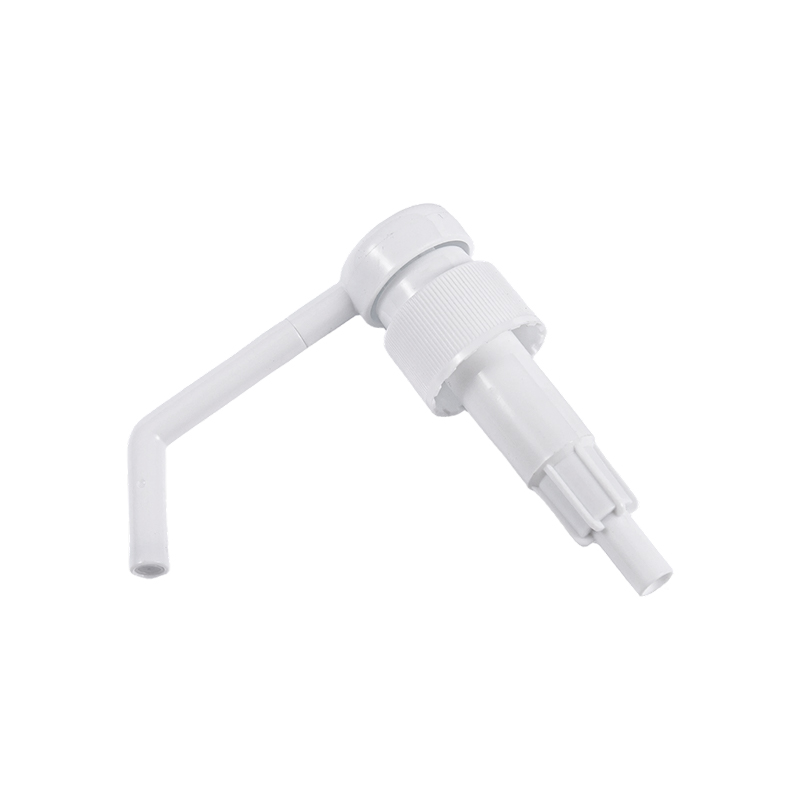 Corrosion-Resistant Lotion Pump for Solvent-Based FormulasThis high-capacity pump head resists corrosive chemicals like alcohol and chlorine, making it ideal for medical disinfectants and aggressive cleaners. Its splash-proof design and adjustable output improve efficiency in healthcare settings.View Product →
Shaoxing Shangyu Haibo Spray Plastic Co., Ltd. manufactures dispensing systems built around this exact problem. The corrosion-resistant lotion pump is specifically engineered for formulas with high chemical or solvent content, including aggressive cleaners, nail polish remover, and other solvent-heavy products.
A pump that passes a one-week water test can still fail in a solvent-rich formula. Always test the pump together with the bottle and the actual product.
Even when the bottle body holds up, a pump that sticks or leaks after a few weeks can ruin an entire product launch. The pump must be tested alongside the container, not in isolation.
Sourcing Criteria for Chemical-Resistant Spray Bottles
When you buy spray bottles for aggressive formulas, the cost per unit is less important than the cost of a failed batch. Use these four checks before signing a purchase order.
- Define the full solvent profile - list every active ingredient and carrier solvent, not just the brand name of the formula
- Request wetted parts data from the supplier - pump springs, seals, and ball valves must be specified
- Run a compatibility test before bulk ordering - fill at least one sample and hold it at 40-50 degrees C for two weeks
- Verify polymer grade with your supplier - ask for the specific PP, PETG, or ABS grade, not just the general polymer family
A single failed batch can cost more than a full year of unit-price savings. Material validation is the cheapest insurance in the packaging supply chain.
The material selection and customization options your supplier offers matter more than a low unit price. If you need custom color, shape, or a specific chemical-resistant polymer, the correct sourcing path is a dedicated material selection program.
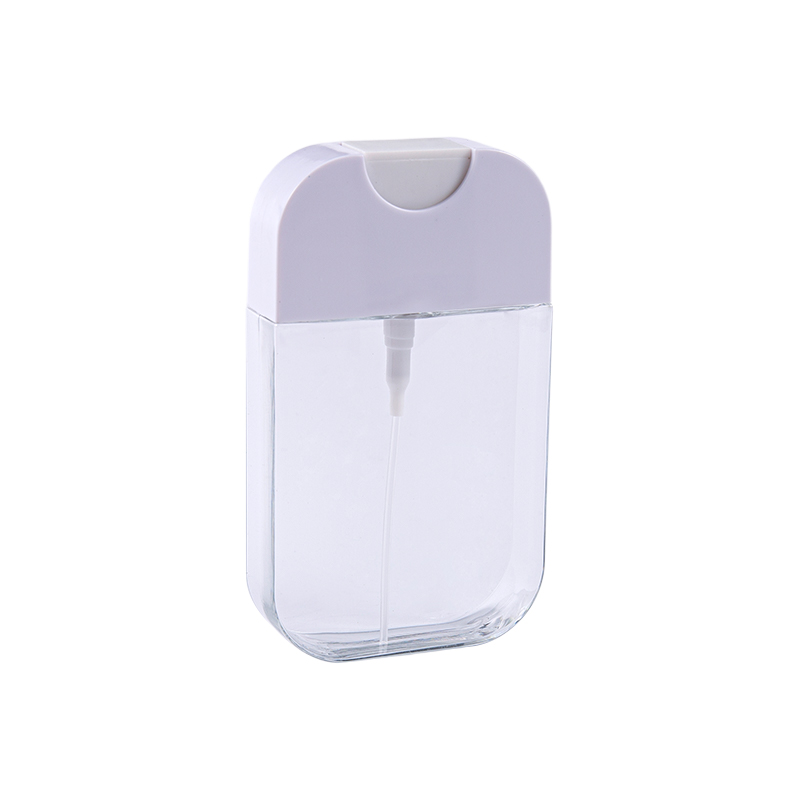 ABS and PETG Card Spray Bottles for Specialty PackagingThese upgraded polymer bottles offer enhanced transparency, impact resistance, and chemical stability. Ideal for luxury samples or UV-sensitive liquids, they provide visible contents and customizable accessories for premium applications.View Product →
For brands handling aggressive liquid or cream formulas, upgrading the polymer family changes the entire packaging risk profile. The ABS/PETG card spray bottle is a good example: it swaps the standard PP resin for alternatives that offer better transparency or impact resistance while still handling moderate chemical loads.
Real-World Failure Modes and Prevention
Every chemical spray bottle failure traces back to one of three root causes. Once you recognize them, prevention becomes predictable.
Common Failure
Bottle wall swelling after weeks of storage
Pump sticking after long-term storage
Cracking around the neck thread
Label bubbling or adhesive failure
Prevention
Switch to a higher-grade polymer or reduce solvent concentration
Specify PTFE or EPDM seals from the outset and test them
Check closure torque and match the cap material to the bottle
Use solvent-resistant adhesives as a separate packaging decision
The root cause is usually not a single component. It is an interaction between the polymer, the pump elastomer, and the storage conditions. That is why a supplier that understands the full packaging system may save you from the most common quality failures.
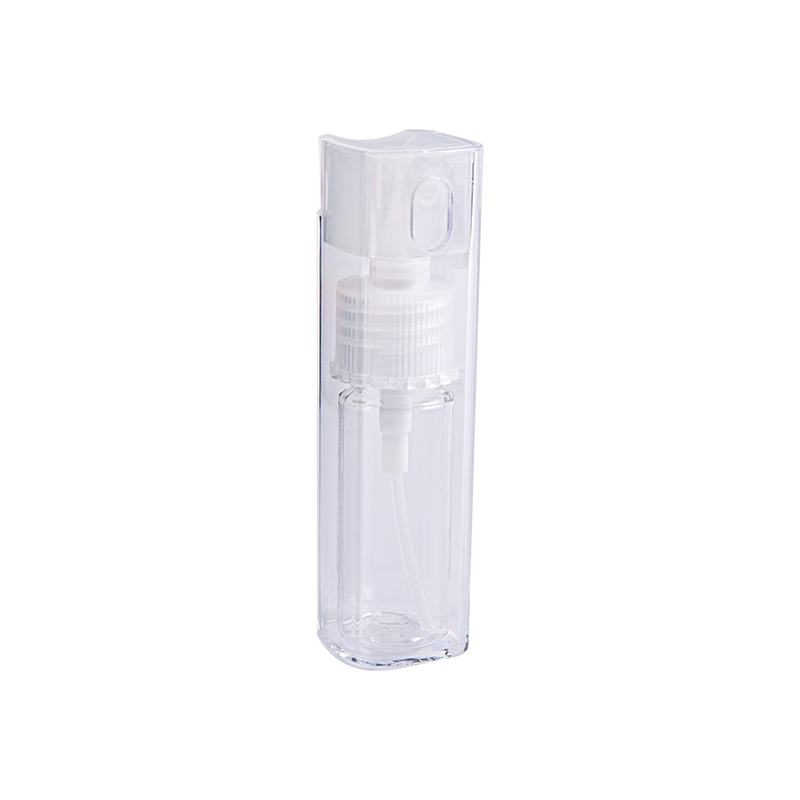 Precision Plastic Spray Bottle with Inner Chamber DesignFeaturing a multi-material build with an inner PET or glass chamber, this spray bottle ensures pure dispensing for high-value liquids. The rugged ABS shell and micro-spray technology offer precise, waste-free output.View Product →
A well-specified plastic spray bottle remains the most cost-effective answer for moderately aggressive formulas when the polymer and pump are matched to the solvent. For this reason, it remains one of the most specified containers in the beauty and cleaning sectors.
FAQ: Chemical Resistant Spray Bottles
Which bottle material works best for acetone-based formulas?
None of the four standard polymers survives acetone long-term. For continuous acetone exposure, a PTFE-lined container or a specialized solvent-grade pack is the only safe choice. For short-fill cosmetic applications, an ABS or HDPE bottle with a corrosion-resistant pump will perform better than standard PP.
Can a PP spray bottle handle 70 percent isopropyl alcohol?
Yes. PP has good compatibility with isopropyl alcohol at concentrations up to 70-90 percent, which is why it dominates the cosmetic and sanitizer market. The pump seal still needs verification because some elastomers soften in alcohol.
Are chemical-resistant spray bottles worth the higher unit cost?
For aggressive formulas, yes. A failed batch creates product recalls and reputational damage that cost far more than the 10-20 percent price difference between a standard bottle and a chemically optimized one. The unit saving does not justify the batch risk.
What tests should I run before placing a bulk order?
Run a two-week accelerated aging test at 40-50 degrees C with your exact formula. Weigh the bottle before and after, check wall thickness, inspect for distortion, and test pump flow rate. This is the cheapest way to catch incompatibility before a full production run.






All rights reserved © Shaoxing Shangyu Haibo Spray Plastic Co.,Ltd.Privacy OEM/ODM Spray Plastic Bottle & Pump Manufacturers
浙ICP备2021023122号