 English
 Español
 عربى
عربى 中文简体
中文简体

How Do Stain Remover Pens Work?
Content
- 1 Chemical Formulation Engineering
- 2 Portable Stain Remover Pen for Clothes
- 3 Enzyme Based Stain Remover Pen
- 4 Travel Size Stain Remover Pen Bulk
- 5 Instant Stain Remover Pen for Oil Stains
- 6 Fabric Safe Stain Remover Pen Manufacturer
- 7 Precision Applicator Manufacturing
- 8 Private Label Development Services
- 9 Frequently Asked Questions
- 9.1 What is the typical shelf life for stain remover pens, and what storage conditions optimize longevity?
- 9.2 How do regulatory requirements differ between cosmetic and household/industrial stain removers?
- 9.3 What minimum order quantities apply for custom-formulated stain remover pens?
- 9.4 Can stain remover pen formulations be optimized for specific stain categories?
- 9.5 What testing validates fabric safety claims for stain remover pens?
- 10 References
STAIN REMOVER PEN technology combines precision dispensing systems with targeted chemical formulations to address localized fabric contamination. This technical analysis examines formulation chemistry, applicator engineering, and manufacturing considerations for B2B procurement in the personal care and hospitality sectors.
Chemical Formulation Engineering
Solvent-Based vs. Enzyme-Based Systems
Stain removal mechanisms fall into two primary categories. Solvent-based formulations dissolve hydrophobic stains through lipophilic action, while enzyme-based systems catalyze biochemical degradation of specific stain molecules.
Formulation Technology Comparison:
| Parameter | Solvent-Based Systems | Enzyme-Based Systems |
| Primary Mechanism | Dissolution and dispersion | Catalytic hydrolysis |
| Effective Temperature Range | 5°C to 40°C | 20°C to 50°C (optimal 37°C) |
| Shelf Life (unopened) | 36 months | 18-24 months |
| pH Range | 6.0-8.5 (neutral) | 7.0-9.0 (mildly alkaline) |
| Stain Specificity | Broad spectrum | Targeted (protein, lipid, carbohydrate) |
| Environmental Profile | Moderate VOC content | Biodegradable |
Pen Delivery Mechanism Design
Applicator systems must balance flow control with fabric surface interaction. Felt-tip configurations (polyester fiber, 3-5mm diameter) provide capillary flow regulation, while roller-ball mechanisms offer mechanical agitation benefits.
- Felt-Tip Systems: Absorbent fiber density of 0.15-0.25 g/cm³ ensures consistent flow rates (0.05-0.1 ml per application)
- Roller-Ball Systems: Stainless steel balls (5-8mm diameter) with controlled clearance (0.02-0.05mm) prevent leakage while enabling mechanical stain disruption
- Brush-Tip Systems: Nylon bristles (0.1-0.2mm diameter) for textured fabric penetration
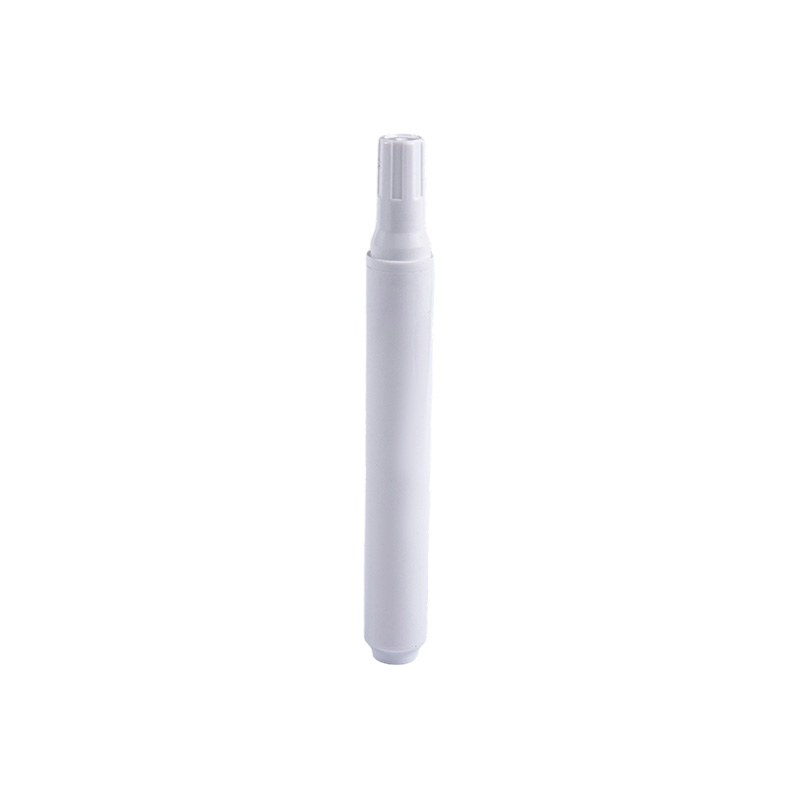
Portable Stain Remover Pen for Clothes
Portable stain remover pen for clothes applications demands compact packaging engineering without compromising formulation capacity. Unit dimensions typically constrain internal reservoir volume to 8-12ml while maintaining structural integrity.
On-the-Go Application Engineering
Field use scenarios impose specific performance requirements. Formulations must function across variable temperature ranges and humidity levels without phase separation or viscosity changes.
Environmental Performance Specifications:
| Condition | Performance Requirement | Test Method |
| High Temperature (40°C) | No leakage, viscosity change <15% | 14-day storage test |
| Low Temperature (5°C) | Flow initiation within 5 seconds | Refrigerated conditioning |
| Low Humidity (20% RH) | Tip drying resistance >30 days | Desiccator storage |
| High Humidity (80% RH) | No external moisture absorption | Climate chamber exposure |
| Vibration (transport simulation) | Zero leakage at 1g RMS | ISTA 2A protocol |
Fabric Compatibility Matrix
Safe application requires understanding fiber chemistry interactions. Protein-based fibers (wool, silk) demonstrate sensitivity to alkaline conditions, while synthetic polyesters resist most chemical agents but suffer from oil-based stain affinity.
Enzyme Based Stain Remover Pen
Enzyme based stain remover pen formulations leverage biological catalysts for targeted stain degradation. Enzyme selection determines efficacy against specific contaminant categories.
Enzyme Classification and Function
Commercial formulations typically incorporate multi-enzyme systems for broad-spectrum efficacy:
- Proteases (Subtilisin): Hydrolyze peptide bonds in protein stains (blood, egg, dairy); optimal activity at pH 8.0-10.0, 40-60°C
- Lipases: Catalyze triglyceride hydrolysis in oil and grease stains; require calcium ions (Ca²⁺) for structural stability
- Amylases: Breakdown starch-based stains (pasta, rice, gravy); operate effectively at pH 6.0-7.5
- Mannanases: Target guar gum thickeners in processed foods and cosmetics
Enzyme Activity Parameters:
| Enzyme Type | Activity Units (U/g) | Temperature Optimum | pH Optimum | Stain Target |
| Subtilisin A | 50,000-80,000 | 50-60°C | 8.0-10.0 | Protein |
| Lipase T | 20,000-40,000 | 35-45°C | 7.0-9.0 | Lipid/Oil |
| α-Amylase | 30,000-50,000 | 50-70°C | 6.0-7.5 | Starch |
| Mannanase | 10,000-25,000 | 40-50°C | 6.5-8.0 | Thickeners |
Formulation Stabilization
Enzyme stability in aqueous formulations requires preservative systems and activity stabilizers. Glycerol (10-20% w/w) maintains protein hydration shells, while boric acid (0.5-1.0%) inhibits microbial contamination without significant pH impact.
Travel Size Stain Remover Pen Bulk
Procuring travel size stain remover pen bulk quantities serves hospitality, airline, and corporate gift markets. Miniaturization engineering must preserve functionality while meeting strict dimensional constraints.
Hospitality Industry Specifications
Hotel amenity applications require TSA-compliant dimensions (under 100ml for carry-on inclusion, though pens typically fall well below this threshold) and premium aesthetic presentation.
Established in 1995, Shaoxing Shangyu Haibo Spray Plastic Co., Ltd. specializes in the production of mini sprayers, perfume pens, and cartridge perfume bottles. Our comprehensive product range includes seven major series with over 100 varieties, including plastic perfume tubes, liquid dispensers, perfume atomizers, spray heads, vacuum bottles, caps, and spray bottles. These capabilities directly support travel size stain remover pen bulk manufacturing with established supply chains for precision plastic components.
Volume Economics and Packaging Configurations
Bulk procurement options include:
- Individual Polybag: Basic protection, cost-optimized for amenity tray inclusion
- Blister Cards: Retail-ready presentation with printed instructions
- Display Boxes: 12/24-unit configurations for counter placement
- Custom Sleeves: Branded paper or plastic wraps for corporate identity
Instant Stain Remover Pen for Oil Stains
Instant stain remover pen for oil stains formulations prioritize rapid lipophilic action. Oil-based stains (lipstick, cooking grease, machinery lubricants) require specific surfactant chemistry for effective emulsification.
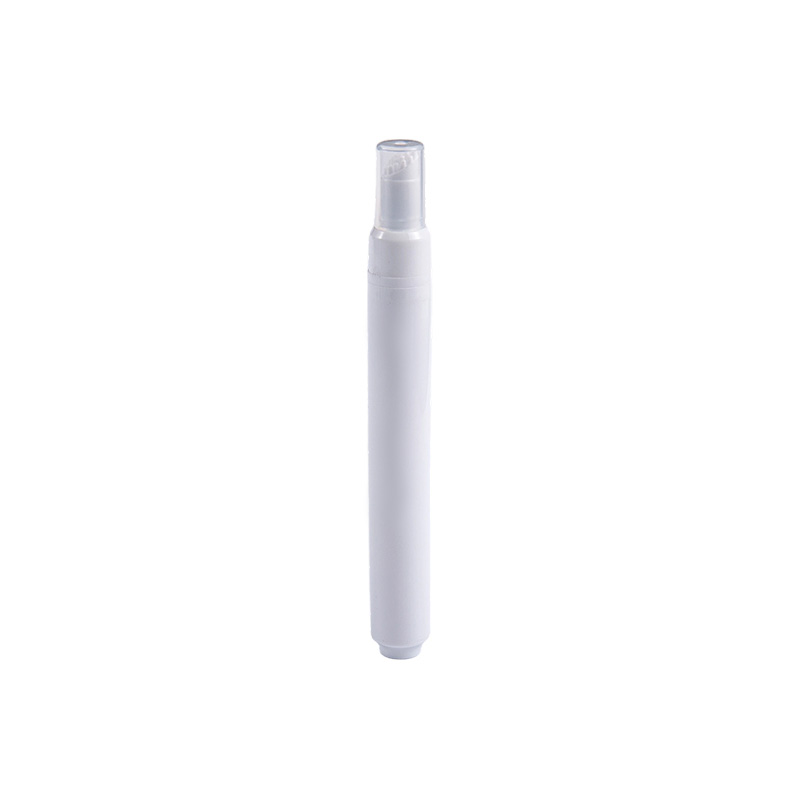
Surfactant System Engineering
Non-ionic surfactants dominate oil-stain formulations due to temperature-independent performance and low foam characteristics. Hydrophilic-lipophilic balance (HLB) values of 12-16 optimize oil-in-water emulsion formation.
Surfactant Performance Matrix:
| Surfactant | HLB Value | CMC (mg/L) | Oil Removal Efficiency | Biodegradability |
| Alcohol Ethoxylate (C12-14, 7EO) | 12.5 | 65 | High | Readily biodegradable |
| Nonylphenol Ethoxylate (9EO) | 13.0 | 50 | Very High | Poor (regulated in EU) |
| Glucoside (C8-10) | 14.0 | 120 | Moderate | Readily biodegradable |
| Polysorbate 80 | 15.0 | 15 | High | Biodegradable |
Emulsification Kinetics
Instant action requires low interfacial tension (<10 mN/m) achieved through surfactant concentrations above critical micelle concentration (CMC). Mechanical agitation from pen applicator tip reduces droplet size to <5μm, preventing redeposition on fabric fibers.
Fabric Safe Stain Remover Pen Manufacturer
Selecting a fabric safe stain remover pen manufacturer requires verification of material safety testing, formulation stability protocols, and regulatory compliance documentation.
Safety Testing Protocols
Comprehensive safety evaluation encompasses:
- Colorfastness Testing: AATCC Test Method 8 (crocking) and 61 (wash fastness) on standard multifiber test fabric
- Fiber Damage Assessment: Tensile strength retention >95% after 10 treatment cycles (ASTM D5034)
- Skin Irritation: In vitro reconstructed human epidermis (RhE) test (OECD 439) for dermal compatibility
- Phototoxicity: 3T3 NRU assay for photoirritation potential
Our products are widely used in the packaging of cosmetics, daily chemical products, and healthcare industries, with manufacturing processes adhering to ISO 9001 quality management systems and cosmetic GMP guidelines.
Regulatory Compliance Framework
Market-specific requirements dictate formulation constraints:
| Regulation | Scope | Key Requirements |
| EU Cosmetics Regulation (EC) 1223/2009 | Cosmetic stain removers | Safety assessment, CPNP notification, restricted substance compliance |
| FDA 21 CFR 700-740 | US cosmetic products | Prohibited ingredient compliance, voluntary registration |
| EPA Safer Choice | Environmental claims | Surfactant biodegradability, packaging recyclability |
| IFRA Standards | Fragranced products | Allergen labeling, concentration limits |
Precision Applicator Manufacturing
Pen mechanism engineering determines user experience and formulation stability. Component tolerances and material selections impact performance consistency.
Reservoir and Closure Systems
Polypropylene (PP) reservoirs (0.5-1.0mm wall thickness) provide chemical resistance and moisture barrier properties. Closure systems incorporate:
- Threaded Caps: 13/415 or 15/415 neck finish with torque seal (0.8-1.2 N·m)
- Snug-Fit Caps: Polyethylene (LDPE) plug seals for tamper-evident functionality
- Shrink Bands: PVC or PET-G bands for retail security
Our technical capabilities in precision plastic molding support custom applicator designs with dimensional tolerances of ±0.05mm. Products exported to countries like the United States, Germany, Japan, Hungary, and various European Union nations demonstrate compliance with diverse international standards.
Private Label Development Services
OEM Formulation Customization
B2B clients require formulation adaptation for specific market positioning. Development services include:
- Base Formula Modification: Fragrance integration, viscosity adjustment, colorant addition
- Performance Optimization: Stain-specific efficacy enhancement through surfactant package adjustment
- Preservative System Selection: Paraben-free, phenoxyethanol-based, or organic acid systems
- Packaging Customization: Custom colors, silk-screen printing, hot-stamping
We warmly welcome new and old friends from all walks of life to visit us for guidance and to explore opportunities for mutual growth. Our development team provides formulation stability testing (3-month accelerated aging at 40°C/75% RH) and compatibility verification prior to production scale-up.
Frequently Asked Questions
What is the typical shelf life for stain remover pens, and what storage conditions optimize longevity?
Unopened portable stain remover pen for clothes maintains efficacy for 24-36 months depending on formulation type. Enzyme-based systems require storage at 5-25°C away from direct sunlight to preserve biological activity. Solvent-based formulations tolerate broader temperature ranges (-10°C to 40°C) but should avoid prolonged UV exposure to prevent oxidation. Relative humidity below 60% prevents moisture ingress through packaging barriers.
How do regulatory requirements differ between cosmetic and household/industrial stain removers?
Cosmetic-classified STAIN REMOVER PEN products (intended for skin contact during application) require comprehensive safety assessments under EU Cosmetics Regulation or FDA cosmetic guidelines, including preservative efficacy testing and microbial challenge studies. Household/industrial formulations fall under detergent regulations (EU Detergent Regulation 648/2004) with focus on biodegradability and labeling requirements rather than dermal safety dossiers. We formulate to cosmetic standards unless specified otherwise, ensuring broadest market applicability.
What minimum order quantities apply for custom-formulated stain remover pens?
Custom enzyme based stain remover pen development requires minimum production runs of 10,000-15,000 units to justify formulation stability testing and regulatory documentation costs. Existing platform formulations (neutral or oil-focused) accommodate lower MOQs of 5,000 units with private label branding. Travel size stain remover pen bulk orders for hospitality amenity applications typically start at 50,000 units for optimal unit economics, with scalable pricing tiers at 100,000 and 500,000 units.
Can stain remover pen formulations be optimized for specific stain categories?
Yes, targeted formulations enhance efficacy against specific contaminants. Instant stain remover pen for oil stains requires elevated lipophilic surfactant concentrations (15-25% vs. standard 8-12%) and potentially solvent boosters (propylene glycol, dipropylene glycol). Protein-specific formulations increase protease activity and incorporate mild oxidizers (hydrogen peroxide derivatives) for enhanced blood and dairy stain removal. We provide stain panel testing (10 standard stains: coffee, wine, blood, lipstick, motor oil, grass, chocolate, ink, tomato sauce, foundation) to validate custom formulation performance.
What testing validates fabric safety claims for stain remover pens?
Fabric safe stain remover pen manufacturer claims require standardized textile testing. AATCC Test Method 61 (Colorfastness to Laundering) assesses dye bleeding potential, while ASTM D5035 (Breaking Force and Elongation) measures fiber strength retention post-treatment. We conduct accelerated aging tests (5 treatment cycles on wool, cotton, polyester, silk, and nylon) with microscopic fiber examination (100x magnification) for surface damage. pH buffering to 6.5-7.5 ensures compatibility with protein fibers sensitive to alkaline conditions.
References
- American Association of Textile Chemists and Colorists. (2021). AATCC Technical Manual. Research Triangle Park, NC: AATCC.
- European Commission. (2009). Regulation (EC) No 1223/2009 of the European Parliament and of the Council on cosmetic products. Official Journal of the European Union, L 342, 59-209.
- Organization for Economic Cooperation and Development. (2021). OECD Guidelines for the Testing of Chemicals, Section 4: Health Effects. Paris: OECD Publishing.
- Cutler, W.G. & Davis, R.C. (Eds.). (2022). Detergency: Theory and Test Methods (3rd ed.). Boca Raton, FL: CRC Press.
- International Fragrance Association. (2023). IFRA Standards Library. Geneva: IFRA.
- Showell, M.S. (Ed.). (2019). Handbook of Detergents, Part D: Formulation. Boca Raton, FL: CRC Press.
related products





All rights reserved © Shaoxing Shangyu Haibo Spray Plastic Co.,Ltd.Privacy OEM/ODM Spray Plastic Bottle & Pump Manufacturers
浙ICP备2021023122号