 English
 Español
 عربى
عربى 中文简体
中文简体

What Is a Perfume Spray Tube?
Content
- 1 1. How a Perfume Spray Tube Works
- 2 2. Types of Perfume Spray Tubes
- 3 3. Key Applications by Industry
- 4 4. How to Choose the Right Perfume Spray Tube
- 5 5. Wholesale Sourcing Guide
- 6 6. About Haibo Spray — Your Trusted Perfume Spray Tube Manufacturer
- 7 7. Frequently Asked Questions (FAQ)
- 7.1 Q1: What makes a perfume spray tube with fine mist nozzle different from a standard spray?
- 7.2 Q2: How do I refill a refillable perfume spray tube for travel?
- 7.3 Q3: What is the minimum order quantity for bulk perfume spray tubes wholesale?
- 7.4 Q4: Is aluminum perfume spray tube packaging better than plastic?
- 7.5 Q5: How do I verify that a perfume spray tube supplier meets quality standards?
- 8 Conclusion
- 9 References
A perfume spray tube is a precision dispensing package designed to atomize liquid fragrance into a fine, controlled mist through an integrated pump-and-nozzle mechanism. Unlike conventional bottle-and-cap formats, a perfume spray tube combines the storage vessel, pump actuator, and spray nozzle into a single compact unit—delivering consistent dosage, minimizing oxidation exposure, and enabling application precision that defines the modern fragrance consumer experience. For cosmetic brands, wholesale distributors, and private label operators, understanding the engineering, material science, and commercial dimensions of perfume spray tubes is fundamental to making sourcing decisions that protect product quality and brand reputation.
1. How a Perfume Spray Tube Works
1.1 Internal Mechanism: Dip Tube, Pump, and Actuator
The functional core of every perfume spray tube consists of three integrated components working in sequence to deliver a repeatable, measured spray dose:
- Dip tube: A thin-walled polyethylene or polypropylene tube extending from the pump inlet to the base of the reservoir. Its length is calibrated to reach the lowest point of the container geometry, ensuring full liquid evacuation with minimal residual waste—typically less than 3% of fill volume in well-designed systems.
- Pump mechanism: A piston-and-spring assembly that draws liquid up the dip tube on the upstroke (via negative pressure) and forces it through the nozzle on the downstroke. The pump spring is the primary determinant of actuation force (typically 10–25 N for fragrance pumps) and output per stroke (typically 0.07–0.15 ml for standard perfume applications).
- Actuator and nozzle: The actuator is the user-contact surface that transmits finger pressure to the pump piston. The nozzle orifice geometry—diameter, shape, and surface finish—determines the spray pattern, particle size distribution, and directional consistency of the emitted mist.

1.2 Fine Mist Nozzle Technology and Spray Particle Size
The spray performance of a perfume spray tube with fine mist nozzle is quantified primarily by the Volume Median Diameter (VMD) of the droplet size distribution. For fragrance applications, optimal VMD falls in the range of 30–80 µm—fine enough to remain airborne for 2–5 seconds for effective olfactory perception, yet large enough to deposit on skin rather than being inhaled into the respiratory tract.
Fine mist nozzle technology achieves this particle size range through controlled pressure-swirl atomization: liquid entering the nozzle chamber is imparted with rotational velocity by tangential feed channels, creating a spinning liquid sheet at the orifice that breaks up into fine droplets via surface tension instability. Nozzle orifice diameters for fine mist fragrance applications are typically 0.2–0.35 mm, precision-machined to tolerances of ±0.01 mm to ensure consistent spray angle (typically 30–50°) and droplet size across production batches.
1.3 Perfume Spray Tube with Fine Mist Nozzle — Performance Specs
| Parameter | Standard Mist | Fine Mist | Ultra-Fine Mist |
|---|---|---|---|
| VMD droplet size | 80–150 µm | 30–80 µm | 10–30 µm |
| Spray angle | 20–30° | 30–50° | 40–60° |
| Output per stroke | 0.12–0.20 ml | 0.07–0.12 ml | 0.05–0.08 ml |
| Typical application | Body mist, room spray | Eau de parfum, cologne | Luxury parfum, precision dosing |
1.4 Spray Pattern Types
Beyond droplet size, the geometric pattern of the emitted spray affects application coverage and consumer experience. The three primary spray patterns available in perfume spray tube nozzle designs are:
- Cone (hollow or solid): The most common pattern for fragrance applications. A hollow cone pattern produces a ring-shaped deposit ideal for wrist and neck application; a solid cone provides uniform coverage over larger skin surface areas.
- Flat fan: Produces an elliptical spray pattern suited to directional application. Less common in personal fragrance but used in room and linen spray applications.
- Stream: A single coherent liquid jet with minimal atomization. Used in precision-dose pharmaceutical and clinical applications rather than fragrance.
2. Types of Perfume Spray Tubes
2.1 Plastic Perfume Spray Tubes — Materials and Grades
Plastic perfume spray tubes represent the highest-volume production category due to their design flexibility, cost efficiency, and broad chemical compatibility with alcohol-based fragrance formulations. The primary plastic materials used are:
- PET (Polyethylene Terephthalate): Excellent clarity, good alcohol resistance, and high surface quality for decoration. The dominant material for transparent and translucent fragrance spray tubes. Barrier properties can be enhanced with PETG or multilayer co-extrusion for sensitive formulations.
- PP (Polypropylene): Superior chemical resistance and lower density than PET. Preferred for pump components and caps due to its fatigue resistance under repeated flexing. Less optically clear than PET but available in a wide range of opaque color options.
- HDPE (High-Density Polyethylene): Excellent chemical resistance, particularly for non-alcohol and oil-based formulations. Soft-squeeze tube variants use LDPE for flexible-wall dispensing without a pump mechanism.
- Acrylic (PMMA): Glass-like optical clarity and premium surface finish. Used for high-end perfume spray tube bodies where visual impact at point of sale is a priority. Higher cost than PET but delivers luxury brand aesthetics at lower weight than glass.
2.2 Aluminum Perfume Spray Tube Packaging — Structure and Benefits
Aluminum perfume spray tube packaging occupies the premium tier of the spray tube market, offering a combination of functional and aesthetic properties unmatched by plastic alternatives. The aluminum tube body is formed by impact extrusion of high-purity aluminum slugs, producing a seamless, monolithic container wall with no weld lines or seams that could become failure points under internal pressure.
Key advantages of aluminum perfume spray tube packaging over plastic equivalents include:
- Complete light barrier: Aluminum is opaque to UV and visible light across the entire spectrum, providing absolute protection for photosensitive fragrance ingredients (citrus top notes, aldehydes) that degrade on UV exposure.
- Oxygen barrier: Zero oxygen permeability compared to PET (OTR: 0.04–0.08 cc/pkg/day) extends fragrance shelf life by preventing oxidative degradation of top notes.
- Recyclability: Aluminum is infinitely recyclable without quality degradation, supporting brands' sustainability commitments and circular economy compliance requirements.
- Premium tactile quality: The weight and thermal conductivity of aluminum communicate quality to consumers in a way that plastic cannot replicate—a significant factor in luxury fragrance positioning.
2.3 Refillable Perfume Spray Tube for Travel — Design Features
The refillable perfume spray tube for travel addresses the dual consumer requirements of portability and sustainability. Regulatory compliance (TSA/IATA 100 ml liquid restriction for carry-on luggage) and the growth of fragrance wardrobe culture—owning multiple scents for different occasions—have driven strong demand growth for compact, refillable formats.
Engineering features that define a high-quality refillable perfume spray tube for travel:
- Volume range: 5–30 ml, with 10 ml and 15 ml being the most commercially significant sizes for travel compliance and value proposition.
- Refill mechanism: Bottom-fill valve systems (compatible with standard perfume bottle spray nozzles) allow refilling without removing the pump, preventing fragrance spillage and evaporation loss. Top-fill designs with removable pump collars are simpler but less user-friendly.
- Leak-proof construction: Silicone O-ring seals at the pump-to-tube interface and nozzle lock-down cap with positive engagement are mandatory for aviation carry-on compliance. IATA Dangerous Goods Regulations (Section II) require packaging to withstand pressure differentials equivalent to 95 kPa without leakage.
- Protective overcap: A snap-fit or screw-fit overcap covering the actuator prevents accidental discharge in luggage—a critical consumer complaint driver for travel spray products.
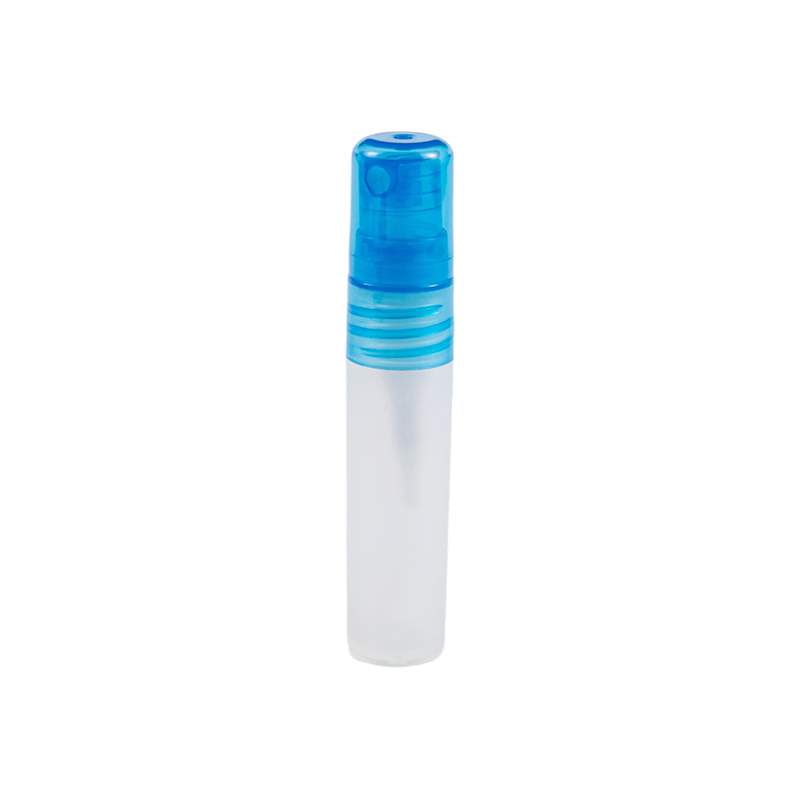
2.4 Airless vs Conventional Pump Spray Tubes
| Feature | Conventional Pump Spray Tube | Airless Pump Spray Tube |
|---|---|---|
| Air contact with formula | Yes — air enters via vent hole | No — piston advances to eliminate headspace |
| Oxidation protection | Moderate | Excellent |
| Formula evacuation rate | 85–92% typical | 95–99% typical |
| Orientation dependence | Requires upright or near-upright | Fully orientation-independent |
| Component complexity | Lower | Higher (piston + follower plate) |
| Unit cost | Lower | Higher (20–50% premium typical) |
| Best application | Standard alcohol-based fragrances | Sensitive formulas, oil-based perfumes, luxury positioning |
3. Key Applications by Industry
3.1 Fragrance and Perfume Packaging
The fragrance industry is the primary market for perfume spray tubes, spanning Eau de Toilette, Eau de Parfum, and Parfum concentration categories across mass market, prestige, and luxury price tiers. Key packaging requirements vary significantly by tier: mass market products prioritize cost efficiency and production speed; prestige products demand consistent spray performance and decoration quality; luxury products require premium materials, tight dimensional tolerances, and bespoke decoration techniques including hot stamping, UV coating, and soft-touch finishing.
3.2 Cosmetics and Skincare Sprays
Beyond fragrance, perfume spray tubes and their functional equivalents serve the facial mist, setting spray, and body mist segments of the cosmetics market. These applications require pump mechanisms with higher output per stroke (0.15–0.25 ml) for broader coverage and nozzle geometries optimized for wider spray angles (60–90°). Chemical compatibility requirements expand beyond alcohol to include humectants (glycerin, hyaluronic acid), botanical extracts, and preservative systems that may interact with certain plastic materials.
3.3 Healthcare and Pharmaceutical Applications
Medical-grade spray dispensing uses the same fundamental pump-and-nozzle architecture as fragrance applications but with substantially tighter specifications for dosage accuracy (±5% per stroke vs ±15% for cosmetic applications), particle size control (for nasal and throat spray applications), and material biocompatibility (USP Class VI plastics for direct mucosal contact). Regulatory submission requirements (FDA 510(k), CE MDR) mandate documented validation of dose uniformity, spray pattern, and container closure integrity across the product's shelf life.
3.4 Daily Chemical and Personal Care Products
Hair care sprays, deodorant body sprays, insect repellents, and household fragrance products represent the highest-volume application segments for bulk perfume spray tubes wholesale procurement. These applications typically prioritize pump durability (cycle life of 30,000–50,000 actuations vs 10,000–15,000 for fragrance pumps), chemical resistance to aggressive formulation components, and cost efficiency over the premium aesthetic specifications of prestige fragrance packaging.
4. How to Choose the Right Perfume Spray Tube
4.1 Volume and Portability Considerations
Container volume selection should be driven by the target retail price point, usage occasion, and consumer repurchase frequency:
| Volume | Primary Use Case | Typical Retail Positioning | Pump Output Recommendation |
|---|---|---|---|
| 5–15 ml | Travel, sample, gifting | Entry/trial, travel retail | 0.07–0.10 ml/stroke |
| 30–50 ml | Core personal fragrance SKU | Mid-range retail | 0.10–0.12 ml/stroke |
| 75–100 ml | Primary full-size fragrance | Prestige and mass prestige | 0.10–0.15 ml/stroke |
| 150–200 ml | Body mist, value size | Mass market, promotional | 0.15–0.25 ml/stroke |
4.2 Material Compatibility with Fragrance Formulations
Chemical compatibility between the perfume spray tube materials and the fragrance formulation must be validated before production commitment. Key compatibility risks include:
- High-alcohol formulations (>80% ethanol): Compatible with PET, PP, HDPE, and aluminum. Avoid polystyrene (PS) and ABS which are stress-cracked by high ethanol concentrations over time.
- Oil-based and low-alcohol perfumes: Require compatibility testing with HDPE or aluminum containers. Oil-based formulations can extract plasticizers from PVC and cause swelling in certain PP grades.
- Fragrance ingredients with low pH: Citrus and acidic botanical extracts can accelerate corrosion of aluminum without interior lacquer coating. Specify epoxy or vinyl interior lining for acidic formulations in aluminum tubes.
- Pump and dip tube compatibility: PP and LDPE dip tubes are compatible with most fragrance formulations. PTFE-lined dip tubes are specified for aggressive solvent systems where standard polyolefins show unacceptable swell or extraction.
4.3 Pump Output per Stroke and Dosage Accuracy
Pump output per stroke (measured in ml) determines both the consumer application experience and the product's value proposition (number of applications per unit). For a 50 ml perfume spray tube with 0.10 ml/stroke output, the theoretical application count is 500 sprays—a commercially significant figure that brands communicate on packaging. Dosage accuracy (coefficient of variation across 10 consecutive strokes) should be <5% for prestige applications and <10% for mass market products. Request documented pump performance data (output, accuracy, actuation force) from suppliers before finalizing specifications.
4.4 Custom Perfume Spray Tube for Fragrance Brands — OEM/ODM Options
A custom perfume spray tube for fragrance brands transforms a commodity packaging component into a proprietary brand asset. Customization dimensions available from qualified manufacturers include:
- Custom tube geometry: Proprietary cross-sections (oval, rectangular, faceted) and shoulder/base profiles developed through new mold investment. Mold costs typically range from $3,000–$12,000 USD depending on complexity.
- Custom pump collar and actuator: Matched cap and actuator designs in brand-specific colors and shapes that create a cohesive visual system across a fragrance line.
- Decoration: Hot stamping, UV screen printing, soft-touch coating, electroplating, and laser engraving options available depending on tube material and brand positioning.
- Custom fill volume and output: Non-standard fill volumes and pump output rates can be specified for brand differentiation or retail channel-specific SKU strategies.
5. Wholesale Sourcing Guide
5.1 Why Buy Bulk Perfume Spray Tubes Wholesale
Sourcing bulk perfume spray tubes wholesale delivers compounding commercial advantages for fragrance brands, contract fillers, and distributors operating at scale:
- Unit cost reduction: Wholesale pricing typically delivers 40–65% lower unit cost versus retail or small-batch sourcing. At 10,000+ unit volumes, packaging cost as a percentage of product COGS drops significantly, improving gross margin or enabling more competitive retail pricing.
- Batch consistency: A single wholesale production run from one mold and one material batch eliminates the color, dimensional, and performance variation that accumulates when sourcing across multiple small orders.
- Customization access: Most manufacturers gate custom mold development and decoration services behind minimum order commitments that correspond to wholesale purchasing volumes.
- Inventory buffer: Holding finished packaging inventory decouples filling schedules from supplier lead times, reducing exposure to stockouts during peak demand periods.
5.2 MOQ, Lead Time, and Packaging Requirements
| Parameter | Stock Items | Custom / New Mold |
|---|---|---|
| MOQ | 1,000–5,000 units per SKU | 10,000–50,000 units |
| Lead time | 7–20 days | 45–75 days (inc. mold + sample approval) |
| Export packaging | Individual PE bag + divider carton | Custom inner packaging per brand spec |
| Breakage allowance | <0.3% for plastic; <0.5% for aluminum | Per supply agreement |
| Payment terms | 30–50% deposit, balance before shipment | 30–50% deposit, balance on sample approval + production |
5.3 Quality Standards and Certification Checklist
When qualifying a supplier for bulk perfume spray tubes wholesale, verify the following documentation:
- ISO 9001 certification: Confirms systematic quality management across production processes.
- Material safety data: Food-contact or cosmetic-grade material certificates (EU Regulation 10/2011 for plastics in contact with cosmetics; FDA 21 CFR for US market).
- Pump performance test reports: Documented output per stroke, dosage accuracy, actuation force, and cycle life data from third-party or in-house testing.
- Chemical compatibility test data: Immersion test results for pump and tube materials against representative fragrance formulations.
- REACH and RoHS compliance: Mandatory for European market access; increasingly required for US and Asian market premium retail channels.
5.4 How to Evaluate a Reliable Spray Tube Supplier
- Production capacity verification: Request documented daily or monthly output figures. Confirm the supplier can absorb your volume without deprioritizing your orders during peak periods.
- Sample policy: A reputable supplier provides pre-production samples with measured performance data before full production commitment. Resist suppliers who require full payment before samples.
- Export track record: Request references from existing customers in your target markets. Suppliers with established export experience in your destination country will have resolved the documentation, labeling, and customs compliance issues that create delays for less experienced exporters.
- Responsiveness benchmark: Response time during the inquiry and sampling phase is the strongest predictor of responsiveness when you have an urgent production issue at scale.
6. About Haibo Spray — Your Trusted Perfume Spray Tube Manufacturer
6.1 30 Years of Specialized Production
Established in 1995, Shaoxing Shangyu Haibo Spray Plastic Co., Ltd. is a privately-owned enterprise specializing in the production of mini sprayers, perfume pens, and cartridge perfume bottles. With three decades of continuous manufacturing development, Haibo Spray has built the process expertise, equipment infrastructure, and quality management systems required to serve demanding global cosmetic and fragrance packaging customers with consistency and reliability.
Haibo Spray's comprehensive product range encompasses seven major series with over 100 varieties—including plastic perfume spray tubes, liquid dispensers, perfume atomizers, spray heads, vacuum bottles, caps, and spray bottles—providing a one-stop packaging solution for brands seeking to consolidate their supplier base without sacrificing product range breadth.
6.2 Product Range and Export Markets
Haibo Spray's perfume spray tube and dispensing packaging products are widely used in the cosmetics, daily chemical, and healthcare industries. The company's products have earned recognition not only in the domestic Chinese market but across international markets including the United States, Germany, Japan, Hungary, and numerous European Union nations—demonstrating the export compliance capability and product quality standard required for premium global retail channels.
For brands seeking a custom perfume spray tube for fragrance brands, Haibo Spray's OEM and ODM capabilities cover tube geometry customization, pump specification, decoration, and branded packaging—supported by the manufacturing scale and component inventory depth of a 30-year specialized producer.
6.3 Why Global Brands Choose Haibo Spray
- Specialized expertise: Three decades focused exclusively on spray dispensing packaging means Haibo Spray's engineering team brings application-specific knowledge to every customer project—from nozzle selection for perfume spray tubes with fine mist nozzles to refill mechanism design for refillable perfume spray tubes for travel.
- Comprehensive product range: Over 100 SKU varieties across seven product series enable brands to source multiple packaging components from a single qualified supplier, reducing procurement overhead and improving supply chain consistency.
- Competitive pricing with export capability: Established export relationships with customers in North America, Europe, and Asia demonstrate the logistics competence, documentation capability, and quality consistency required for international wholesale supply.
- Customer-oriented service: Haibo Spray welcomes visits from prospective customers for facility tours and collaborative product development discussions—reflecting a partnership approach to customer relationships rather than a transactional one.
7. Frequently Asked Questions (FAQ)
Q1: What makes a perfume spray tube with fine mist nozzle different from a standard spray?
A perfume spray tube with fine mist nozzle produces droplets in the 30–80 µm VMD range through precision pressure-swirl atomization, compared to 80–150 µm for standard mist nozzles. This finer droplet size remains airborne longer (2–5 seconds), produces a broader spray cone for more even skin coverage, and creates the characteristic "cloud" application experience associated with quality fragrance products. The nozzle orifice is precision-machined to ±0.01 mm tolerances and the internal swirl chamber geometry is optimized specifically for alcohol-based fragrance viscosities—making fine mist nozzle components non-interchangeable with standard mist designs even when external dimensions appear similar.
Q2: How do I refill a refillable perfume spray tube for travel?
Most refillable perfume spray tubes for travel use either a bottom-fill valve system or a top-fill removable pump design. For bottom-fill models: remove the base cap to expose the fill valve, press the source perfume bottle's spray nozzle directly onto the fill valve, and pump 5–8 strokes until the tube is filled (visible through transparent tubes or confirmed by weight). For top-fill models: unscrew the pump collar, pour or pipette the fragrance directly into the tube, and replace the pump collar ensuring the dip tube is fully seated. Always fill in a well-ventilated area away from heat sources, as fragrance alcohol is flammable. After filling, test-spray over a sink before placing in luggage to confirm leak-free assembly.
Q3: What is the minimum order quantity for bulk perfume spray tubes wholesale?
For standard stock items, MOQs for bulk perfume spray tubes wholesale typically start at 1,000–5,000 units per SKU depending on the manufacturer's production scheduling. For custom perfume spray tubes for fragrance brands requiring new mold development, MOQs are higher—typically 10,000–50,000 units—to amortize mold investment costs over a viable production run. When evaluating wholesale suppliers, compare total cost of ownership (unit price × MOQ + tooling + shipping + certification) rather than unit price alone. A lower unit price requiring a 50,000-unit MOQ may represent worse economics than a slightly higher price at 10,000 units for a brand still validating market demand.
Q4: Is aluminum perfume spray tube packaging better than plastic?
Aluminum perfume spray tube packaging offers superior barrier properties (complete UV and oxygen exclusion), premium tactile quality, and recyclability advantages over plastic alternatives—but at higher unit cost and with more limited decoration flexibility for certain techniques. Plastic perfume spray tubes (PET, acrylic) offer superior optical clarity for showcasing colored fragrance liquids, lower weight for travel formats, and greater design flexibility for complex geometries. The choice is determined by brand positioning, formulation sensitivity, target retail price point, and sustainability commitments rather than by any universal superiority of one material. Premium and luxury fragrance brands increasingly use aluminum for its sustainability credentials and premium positioning, while mass market and mid-tier brands predominantly use PET for its clarity and cost efficiency.
Q5: How do I verify that a perfume spray tube supplier meets quality standards?
To verify supplier quality for perfume spray tube procurement, request and independently verify: ISO 9001 certification (check certificate validity and scope coverage); material safety certificates confirming cosmetic-grade plastic compliance (EU Regulation 10/2011 or FDA 21 CFR as applicable); pump performance test reports with documented output per stroke, dosage accuracy (CV%), actuation force, and cycle life data; chemical compatibility immersion test data for your specific formulation type; and REACH/RoHS compliance declarations for European market supply. Beyond documentation, request pre-production samples and conduct your own performance testing—measuring output per stroke across 10 consecutive actuations and performing a 30-day immersion compatibility test with your actual fragrance formulation before committing to a full production order.
Conclusion
The perfume spray tube is a precision engineering product that directly determines fragrance application quality, product shelf life, and consumer brand perception. Whether the priority is a perfume spray tube with fine mist nozzle for a prestige Eau de Parfum launch, a refillable perfume spray tube for travel for a sustainability-focused brand extension, aluminum perfume spray tube packaging for a luxury positioning strategy, or bulk perfume spray tubes wholesale for a high-volume filling operation, the principles of material compatibility, pump performance specification, quality verification, and supplier qualification remain consistently applicable. Investing in the correct perfume spray tube specification from a technically capable, certified manufacturer is a foundational decision that protects product quality, brand equity, and long-term commercial performance.
References
- Lefebvre, A. H., & McDonell, V. G. (2017). Atomization and Sprays (2nd ed.). CRC Press. https://doi.org/10.1201/9781315120911
- European Commission. (2011). EU Regulation No 10/2011 on plastic materials and articles intended to come into contact with food. Official Journal of the European Union.
- U.S. Food and Drug Administration. (2022). CFR Title 21 — Food and Drugs: Indirect Food Additives: Polymers. FDA. https://www.ecfr.gov/current/title-21
- European Chemicals Agency (ECHA). (2023). REACH Regulation (EC) No 1907/2006: Registration, Evaluation, Authorisation and Restriction of Chemicals. ECHA. https://echa.europa.eu/regulations/reach
- International Air Transport Association (IATA). (2024). Dangerous Goods Regulations (DGR), 65th Edition. IATA.
- The Fragrance Foundation. (2023). U.S. Prestige Fragrance Sales Report. The Fragrance Foundation. https://www.fragrance.org
- International Organization for Standardization. (2015). ISO 9001:2015 – Quality management systems – Requirements. ISO. https://www.iso.org/standard/62085.html
related products





All rights reserved © Shaoxing Shangyu Haibo Spray Plastic Co.,Ltd.Privacy OEM/ODM Spray Plastic Bottle & Pump Manufacturers
浙ICP备2021023122号