 English
 Español
 عربى
 中文简体


IPA Spray Bottle Guide: Polymer Compatibility, Seal Selection, Sourcing
Content
- 1 Material Choice Decides Whether an IPA Spray Bottle Survives
- 2 Seals, Springs, and Dip Tubes Fail Before the Bottle Does
- 3 Format and Capacity Choices for an IPA Spray Bottle
- 4 A Specification Sheet You Can Send to Any IPA Spray Bottle Supplier
- 5 Common Sourcing Mistakes With Alcohol Spray Bottles
- 6 Frequently Asked Questions About IPA Spray Bottles
Fill a cheap 80 ml spray bottle with 99% isopropyl alcohol and it usually fails inside six weeks. The wall clouds over, the dip tube stiffens, the pump collar starts to bind, and the seam weeps. The alcohol is not at fault. Isopropyl alcohol is a mid-polarity solvent that swells polystyrene, attacks polyester, and triggers stress cracking wherever molding flow lines and neck threads concentrate strain. For brands and contract fillers, the working life of an IPA spray bottle is settled long before filling, by the resin grade and the compounds inside the pump.
Material Choice Decides Whether an IPA Spray Bottle Survives
Definition: An IPA spray bottle is a container-plus-dispenser system in which every wetted part, including the bottle body, dip tube, valve ball, spring, and gasket, must stay chemically compatible with isopropyl alcohol at concentrations from 65% to 99.9% while still delivering a stable spray pattern and a repeatable actuation feel.
Polypropylene (PP) is the correct starting point for 99% isopropyl alcohol packaging, with high-density polyethylene (HDPE) a close second. PP swells less than 1% by volume after 30 days of continuous contact at 23 C, keeps its tensile strength, and resists environmental stress cracking far better than transparent resins. HDPE behaves almost as well but is opaque, which rules it out of shelf-facing work. PETG is the common compromise: near-glass clarity, yet it can still haze under prolonged contact. PET and PS are not compromised options, they are failures waiting to happen.
How Fast Common Bottle Polymers Swell in Isopropyl Alcohol
| Material | IPA resistance | Clarity | Relative cost | Typical role |
| PP | Excellent | Translucent | Low | Bottle body, pump housing, dip tube |
| HDPE | Excellent | Opaque | Low | Large refill and workshop bottles |
| PETG | Good | Near glass | Medium | Travel bottles where appearance matters |
| ABS | Fair | Opaque | Medium | Caps and decorative collars |
| PET | Poor | High clarity | Low | Not for long-term alcohol contact |
| PS | Poor | High clarity | Lowest | Avoid in alcohol service entirely |
A specification that says only "PP" is an unfinished specification. Homopolymer PP gives higher stiffness and cleaner thread forming; copolymer PP absorbs impact better in cold transit. Both tolerate isopropyl alcohol, but they behave differently against the neck thread and the pump collar, so the grade belongs in the drawing, not in a footnote.
Seals, Springs, and Dip Tubes Fail Before the Bottle Does
In an alcohol filling line, the first part to fail is almost always the gasket, not the bottle wall. Nitrile rubber (NBR) can swell 15% to 20% within 72 hours of contact with 99% isopropyl alcohol, lose its sealing force, and let the pump lose prime. FKM fluoroelastomer holds up well against alcohols, EPDM sits in the middle and is acceptable at 70% concentration but not at 99%, and carbon steel springs rust and contaminate the liquid.
Match these to alcohol
- FKM gaskets and O-rings
- 316 stainless steel springs
- LDPE or PP dip tubes
- PP valve balls
Keep these out of alcohol
- NBR gaskets and O-rings
- Carbon steel springs
- PVC dip tubes and plasticizers
- PET and PS bottles in long contact
Working rule: if a supplier cannot name the elastomer that touches the liquid, they have not tested that pump against 99% isopropyl alcohol.
The failure mode is mechanical, not cosmetic. A dip tube that turns rigid stops reaching the bottom of the bottle, and a swollen gasket lets the pump lose suction within a single week of daily use. Both problems appear after the container has already shipped.
Format and Capacity Choices for an IPA Spray Bottle
Capacity is the first dividing line and bottle shape is the second. Isopropyl alcohol spray bottles run from 10 ml to 2 L, and each band solves a different problem.
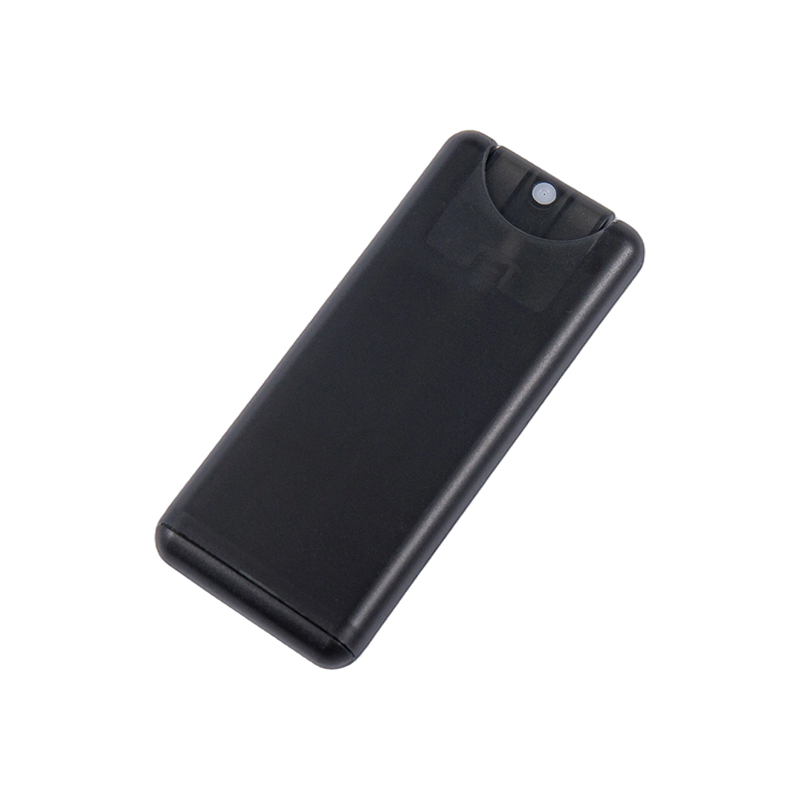
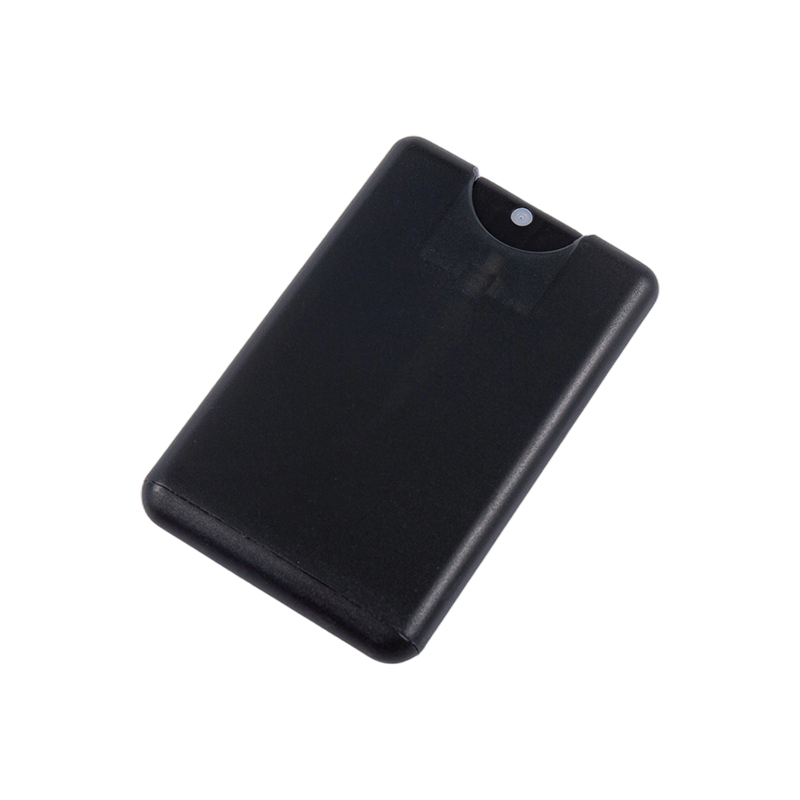
- 10 to 16 ml PP card-type spray bottles for samples, sachets, and single-use kits
- 8 to 15 ml perfume spray tubes with hooks or pen clips for pocket and keyring carry
- 80 to 250 ml standard sprayers for benches, toolboxes, and cleaning carts
- 1 to 2 L refill bottles for workshops and filling stations
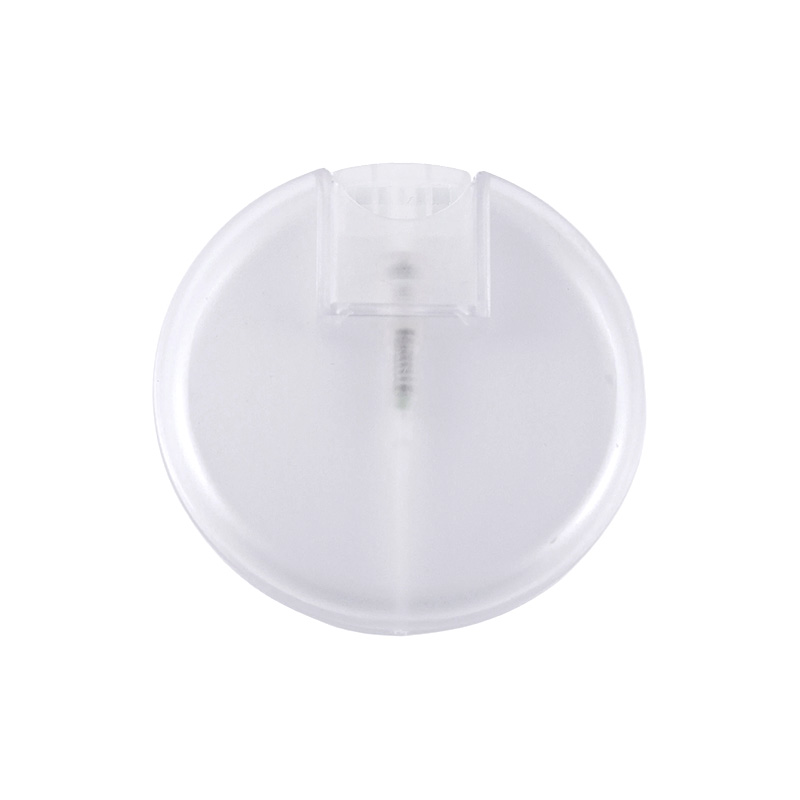 Hook-Style Portable Spray Bottle for Bags and KeychainsSlim 10–25 ml PP spray bottle with hook attachment, ideal for alcohol, perfume, oral care, first aid, and pet leash cleaning.View Product →
The card shape matters for portable use for two reasons: it does not roll across a bag, and its internal cavity is deep enough to house a full-stroke pump, so a 10 ml bottle still produces a genuine mist instead of a squirt. Hanging and clip variants keep the nozzle upright so the tube stays primed.
Large formats are a different engineering problem. A 2 L refill needs a longer dip tube and a larger pump chamber, otherwise every press turns into a grip exercise. Buyers usually write this into the request for quotation as a full-stroke output of 0.10 to 0.15 ml, holding a stable cone at 25 to 50 mm from the nozzle.
A Specification Sheet You Can Send to Any IPA Spray Bottle Supplier
Six lines in a request for quotation eliminate almost every alcohol-related packaging failure before the first sample is molded.
Name the resin grade. Write "PP homopolymer, melt flow rate 20 g/10 min" instead of "PP", and cap the regrind percentage that may be blended back in.
List every wetted part. Body, dip tube, valve ball, spring, and gasket each need a named material, not a category.
Fix pump performance. Specify full-stroke output of 0.10 to 0.15 ml, spray cone of 60 to 90 degrees, and actuation force of 15 to 25 N.
Agree on the compatibility test. Thirty days immersed in 99% isopropyl alcohol at 23 C, plus seven days at 40 C, recording weight change, dimensional change, and torque retention.
Agree on transport testing. An ISTA 1A or 2A drop sequence on filled bottles, followed by a 48-hour leak check at 50 C.
Agree on paperwork. Batch traceability, material declarations, and a migration test report per production lot.
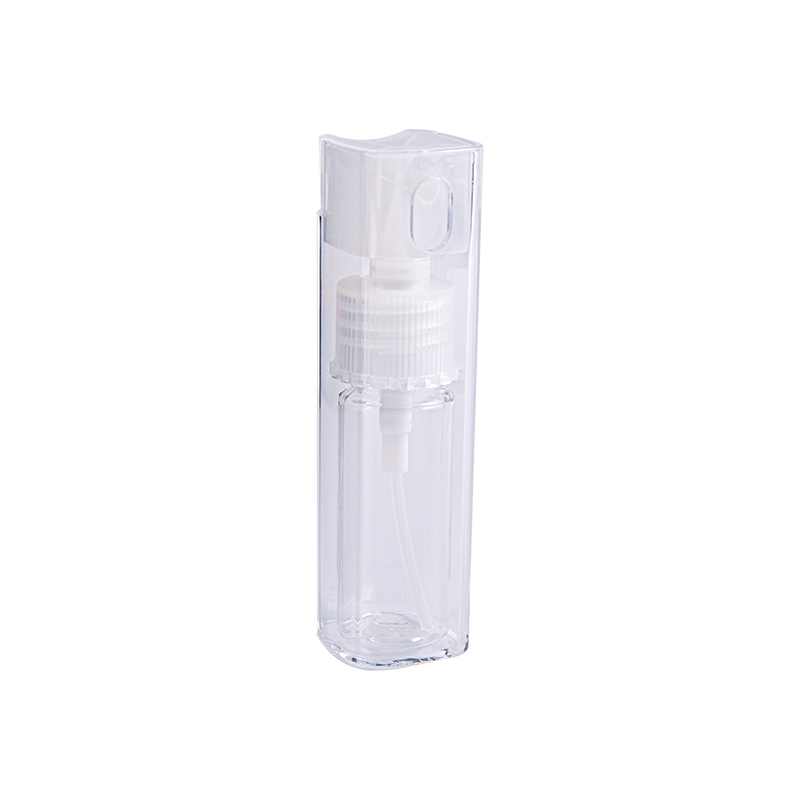 Precision Plastic Spray Bottles for Cosmetics, Personal Care, and Reagents10–40 ml precision spray bottles with ABS casing, PET or glass inner bottle, 0.07 ml pump, and lot-level test documentation for cosmetics and reagents.View Product →
These clauses are only enforceable when a packaging manufacturer runs its own laboratory and can repeat the immersion and leak tests on production parts, not just on a one-off golden sample. Ask for the test equipment list alongside the price sheet.
Common Sourcing Mistakes With Alcohol Spray Bottles
Most isopropyl alcohol packaging problems are purchasing-process problems rather than chemistry problems. Five recur constantly.
- Choosing the bottle for looks and skipping the immersion test. Transparency is exactly the warning sign here.
- Reading "chemical resistant" as "resistant to 99% isopropyl alcohol". Most such claims were written around 70% ethanol.
- Buying bottle and pump separately and never validating them as an assembly. Each part passes alone; the pair leaks together.
- Ignoring filling-line torque. A neck finish that drifts by 0.15 mm will slip under the capping head and produce loose closures.
- Overlooking permeation loss. A 200 ml bottle of 99% alcohol at 40 C can lose roughly 1% to 3% per month through the wall, which belongs in shelf-life math.
A buyer specifying an IPA spray bottle is really buying three promises: the resin will not swell, the seal will not soften, and the pump will still deliver a clean cone on the last drop.
Frequently Asked Questions About IPA Spray Bottles
Does isopropyl alcohol dissolve plastic spray bottles?
It does not dissolve PP or HDPE, but it swells polystyrene, attacks PET and ABS, and accelerates cracking wherever stress concentrates. A PS bottle holding 99% isopropyl alcohol typically crazes within weeks. Polypropylene stays stable across the full concentration range.
Can I use a PET spray bottle for 70% isopropyl alcohol?
Not for repeated or long-term use. Diluted alcohol attacks PET more slowly than the 99% grade, but the same stress-cracking mechanism still applies at the thread and the neck finish. PETG performs better and is a reasonable short-term option, though it is still a compromise rather than a permanent solution.
What capacity works best for a portable isopropyl alcohol spray bottle?
10 to 30 ml suits pocket and pouch carry, while 80 to 120 ml is the practical range for bench and toolbox use. Above 500 ml the container becomes heavy, the dip tube grows long, and the output per stroke starts to vary between presses.
Can a PP bottle store 99% isopropyl alcohol for years?
Yes, provided every wetted component is matched. A PP body with FKM seals, a stainless steel spring, and an LDPE dip tube will hold 99% isopropyl alcohol at room temperature for several years. Swap in a nitrile gasket and the same bottle can start weeping in under two months.






All rights reserved © Shaoxing Shangyu Haibo Spray Plastic Co.,Ltd.Privacy OEM/ODM Spray Plastic Bottle & Pump Manufacturers
浙ICP备2021023122号