 English
 Español
 عربى
 中文简体


Perfume Mini Spray Bottle Sourcing Guide: Specs, Materials and MOQ Tiers
Content
- 1 Perfume Mini Spray Bottle Sizing: Tube Diameter, Height and Fill Tolerance
- 2 Material Compatibility: Why PP Still Carries Most Perfume Mini Spray Bottle Fills
- 3 Atomization and Dose Control: The Tests That Separate Good Minis From Returns
- 4 Travel Retail, Sampling and Gift Sets: Where Perfume Mini Spray Bottles Actually Sell
- 5 MOQ, Lead Time and the Sourcing Risks That Never Make It Into the Quote
- 6 Frequently Asked Questions About Perfume Mini Spray Bottles
Fragrance houses rarely lose a travel-size launch on the scent. They lose it on the bottle. A 10 ml perfume mini spray bottle that dispenses 0.09 ml per stroke instead of the specified 0.06 ml drains a 50,000-unit fill order faster than any fragrance approval cycle.
Buyers who treat the mini sprayer as a commodity accessory meet the same three problems: dose drift between production lots, leakage in transit, and weight loss that only appears after eight to twelve weeks on a shelf. None of them are fixed by a prettier cap.
Those numbers run through the whole project. A filling line set for a 0.06 ml dose will overfill or underfill the moment an actuator batch drifts, and a retailer who finds oil rings inside a carton returns the pallet, not the twelve units that leaked.
Perfume Mini Spray Bottle Sizing: Tube Diameter, Height and Fill Tolerance
Mini perfume sprayers are specified by tube outer diameter and tube height, not by the millilitre figure on a marketing brief, because fill volume follows the internal cavity while the filling line only cares about outer geometry.
An 8 ml and a 10 ml perfume spray tube often share the same 13 mm outer diameter and differ only in height. That single detail decides whether one crimping head and one capping tool can run both sizes, or whether the brand pays for a second tooling set and a second line setup.
| Nominal capacity | Tube outer diameter | Tube height | Typical use | Practical fill tolerance |
| 5 ml | 12 mm | 73 mm | Scent cards and sample vials | +/- 0.2 ml |
| 8 ml | 13 mm | 77 mm | Travel retail, gift-with-purchase | +/- 0.3 ml |
| 10 ml | 13-14 mm | 77-87 mm | Core travel spray | +/- 0.4 ml |
| 15 ml | 14 mm | 87 mm | Purse spray, refill programmes | +/- 0.5 ml |
Fill tolerance is the second number to lock. Headspace, pump displacement and the dip tube all cut into usable volume, so a 10 ml nominal tube usually holds 9.5 to 9.8 ml of juice once the pump is seated. Quoting nominal capacity without stating a tolerance is how overfills get discovered at the filling line instead of the sample stage.
Crimped neck
- Pump and collar are crimped permanently onto the tube
- Lowest evaporation loss, because there is no serviceable joint
- Tamper evidence built into the seal
- Cannot be refilled by the consumer
Screw neck
- Actuator and pump can be unscrewed and replaced
- Suits refill programmes and reusable formats
- Gasket quality decides leak performance
- Torque window on the capping line must be specified
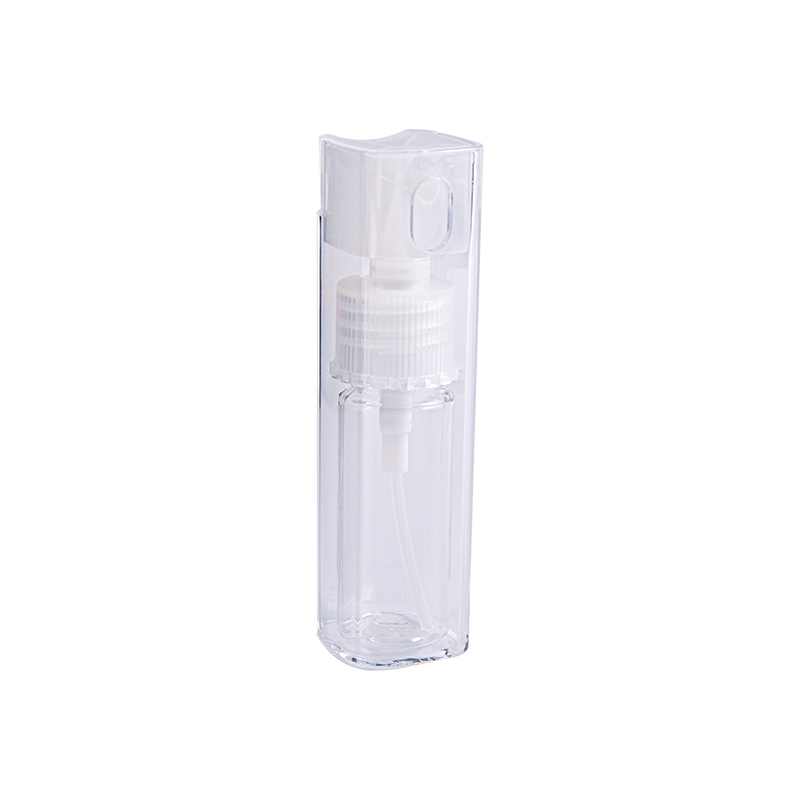
For brands standardising on the 87, 77 and 73 mm heights with 14, 13 and 12 mm diameters, a single polypropylene perfume spray tube family covers the whole range without new tooling.
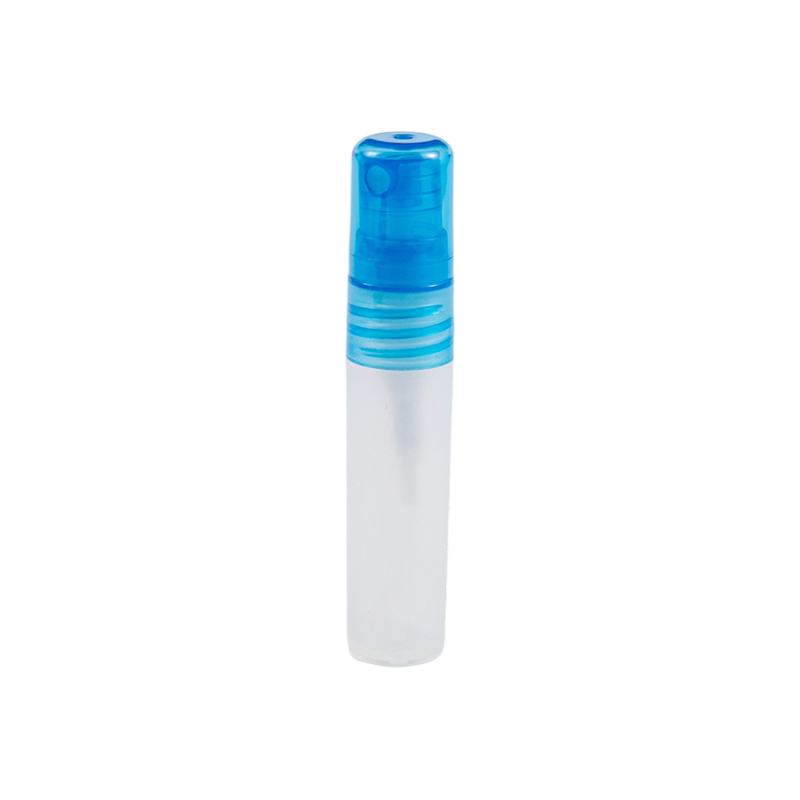 Polypropylene Perfume Spray Tube Family for Standard Mini BottlesA PP spray tube family covering 87/77/73 mm heights and 14/13/12 mm diameters, suited to ethanol-rich fragrance concentrates and standard mini bottles without new tooling.View Product →
Material Compatibility: Why PP Still Carries Most Perfume Mini Spray Bottle Fills
Polypropylene stays the default body material for perfume mini spray bottles because it resists ethanol-rich fragrance concentrates without swelling, and it holds its dimensions through the 40 degrees C stability holds that brands now write into specifications.
A typical eau de parfum is 60 to 80 percent ethanol by volume, with water, terpenes such as limonene, and reactive aldehydes making up the rest. That mixture attacks plastics quietly, and the failure usually shows up as hazing, crazing or slow weight loss rather than a dramatic crack.
- PP homopolymer: highest ethanol resistance and the lowest cost, but translucent rather than glass-clear
- PETG: clarity close to glass for premium positioning, more sensitive to stress cracking under heavy citrus loads
- ABS: good surface finish for caps and collars, poor choice for long contact with ethanol
- PCR grades: usable for recycled-content targets, but the specific grade has to be re-tested rather than assumed
Weight loss is the cleanest comparison because it captures both permeation through the wall and vapour escaping past the pump seal. The spread above is wide enough to change a packaging decision: the fragrance that stays inside a 0.8 percent PP tube drifts past 3 percent in ABS.
Wall thickness and diameter interact with the resin too, and the relationship between perfume spray tube diameter and material compatibility is worth reviewing before a specification is frozen.
Where a fragrance carries an aggressive solvent load or the brand needs a specific surface finish, a special-material perfume spray tube programme is the usual route.
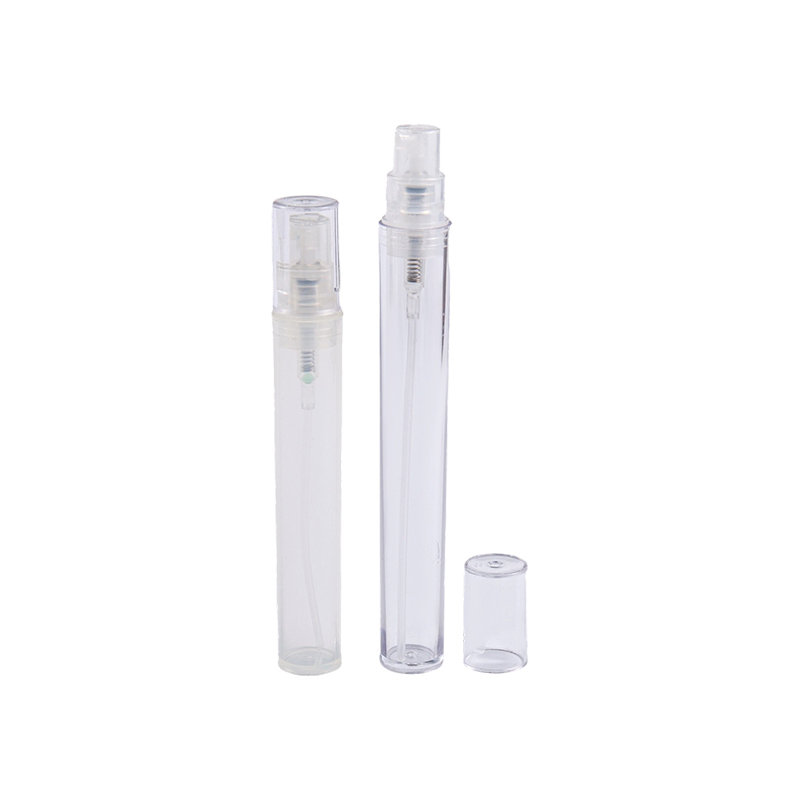 Medical-Grade PETG Perfume Spray Tube for Harsh LiquidsA corrosion-resistant PETG spray tube for aggressive solvents and high-purity liquids, with transparent body, 8/10 ml capacities and 0.07 ml fine atomization.View Product →
Atomization and Dose Control: The Tests That Separate Good Minis From Returns
Atomization quality comes down to three measurable outputs: dose per stroke, spray cone angle and droplet size distribution, and all three have to be re-verified after any change to the actuator, the spring or the tube.
Actuation force on pocket-size fragrance pumps normally sits between 8 and 20 newtons. Below that band the spray feels weak and consumers press twice; above it the pump feels stiff on a 10 ml tube that offers very little grip.
- Weigh the dose. Fire ten strokes into a tared vial, weigh, divide by ten, then repeat on 30 units drawn at random from the lot. Spread across the lot matters more than the average.
- Measure the cone. Fire onto absorbent paper from a fixed 150 mm distance and measure the wetted diameter. Under 40 degrees concentrates liquid in one spot; over 60 degrees wastes product on the air.
- Run the inverted leak test. Hold filled units upside down at 40 degrees C for 24 hours and inspect the collar for rings or staining.
- Simulate transport. Drop the packed carton from 1.2 m, then re-run the leak test to confirm the seal survived.
- Hold a compatibility sample. Twelve weeks at 40 degrees C with the actual fragrance, weighed at the start and at the end.
Travel Retail, Sampling and Gift Sets: Where Perfume Mini Spray Bottles Actually Sell
Mini spray bottles earn their keep in three commercial formats, and each one pushes a different specification.
- Travel retail and airline sets: 8 to 10 ml, often with a hook or hanging loop, expected to survive repeated handling and cabin pressure
- Sampling and scent cards: 2 to 5 ml, the lowest cost per unit, crimped for tamper evidence
- Gift-with-purchase and purse sprays: 10 to 15 ml, frequently pen-clip or refillable screw neck
A pen-clip format solves the one problem a hanging loop cannot: it stays attached to a bag or pocket instead of swinging free, which is why pen-clip sets in 8 to 15 ml have become the default for purse sprays.
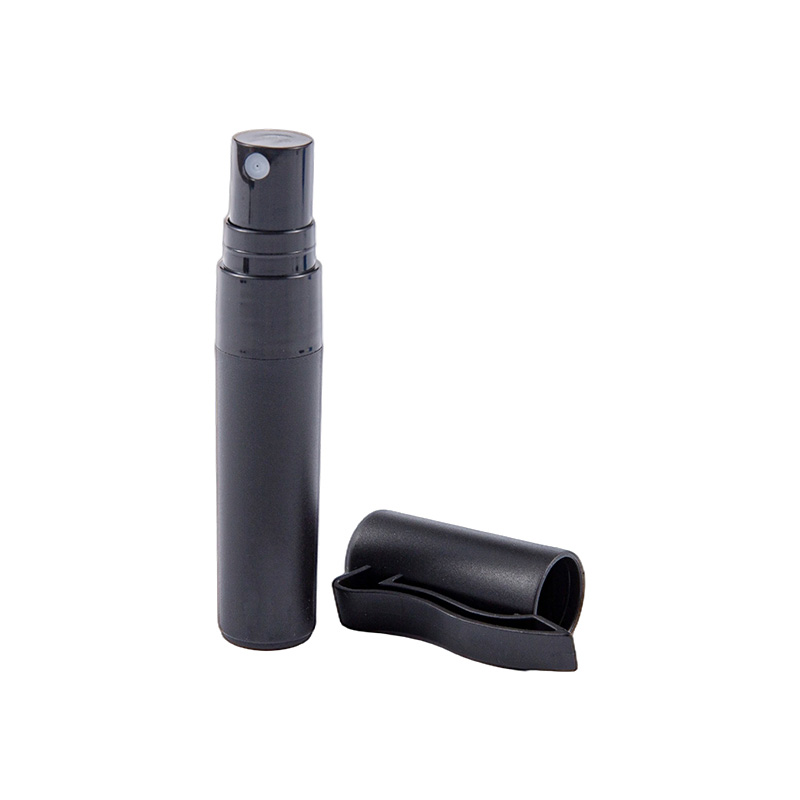 Pen Clip PP Perfume Spray Tube Set 8-15mlA pen-clip PP spray tube set in 8–15 ml sizes with anti-lost clip and 0.15 ml dispensing for portable purse sprays and one-handed use.View Product →
MOQ, Lead Time and the Sourcing Risks That Never Make It Into the Quote
Most mini spray bottle quotes hide three cost drivers: tooling amortisation per size, colour-change downtime, and the fill-line reject rate created by dimensional inconsistency between lots.
Shaoxing Shangyu Haibo Spray Plastic Co., Ltd., a spray packaging manufacturer founded in 1995 in Shangyu, Zhejiang, organises its fragrance packaging across seven product series and more than 100 variants, and exports to the United States, Germany, Japan, Hungary and several EU markets. The company runs an in-house testing laboratory, and its site sits 35 km from Ningbo Port, which shortens the land leg for container bookings.
- Tooling amortisation: every new tube height or diameter is a new mould, so planning a size family cuts total cost
- Colour changes: each change on an injection line costs productive time, so consolidating to two or three colours per run lowers unit price
- Dimensional consistency: a cavity running 0.15 mm oversize passes a visual check and still jams a capping head
- Compatibility re-testing: any change of resin supplier, even to the same nominal grade, restarts the stability clock
Buyers who need a colour, finish or resin outside the standard range can work through a defined material selection and customisation process instead of treating the part as a catalogue item.
Frequently Asked Questions About Perfume Mini Spray Bottles
What size is a perfume mini spray bottle?
Most perfume mini spray bottles fall between 5 and 15 ml. Travel retail and gift-with-purchase programmes cluster at 8 to 10 ml, sampling formats run 2 to 5 ml, and purse sprays reach 15 ml. The capacity is nominal, because the pump body and dip tube displace volume inside the tube.
Are perfume mini spray bottles refillable?
Only screw-neck versions are genuinely refillable, and even then the gasket and torque window decide whether the bottle survives a second fill. Crimped minis are sealed for life and should be specified when tamper evidence matters more than reuse.
Which plastic is used for a perfume mini spray bottle?
Polypropylene is the workhorse for the body and dip tube, PETG appears where glass-like clarity is required, and ABS is normally reserved for caps and collars because it does not tolerate long ethanol contact.
How do you test a mini perfume sprayer for leaks?
Hold the filled unit inverted at 40 degrees C for 24 hours, then inspect the collar and base for oil rings. Repeat the same test after a 1.2 m drop test on the packed carton to confirm the seal survives transport.






All rights reserved © Shaoxing Shangyu Haibo Spray Plastic Co.,Ltd.Privacy OEM/ODM Spray Plastic Bottle & Pump Manufacturers
浙ICP备2021023122号